
The George Washington Bridge Bus Station underwent a $183.2 million renovation from 2013-2017 that preserved Pier Luigi Nervi’s iconic multi-peak roofline while delivering 50% more capacity. You’ll find climate-controlled waiting areas, real-time information displays, and comprehensive ADA improvements including new elevators and escalators. The modernized terminal now serves approximately 5 million annual users with improved traffic flow and utility systems. The transformation’s impact extends beyond transportation infrastructure.
Key Takeaways
- $183.2 million renovation (2013-2017) expanded bus pavilion capacity by 50% while preserving Nervi’s iconic multi-peak roofline design.
- Comprehensive infrastructure upgrades included enhanced electrical systems, improved roadways, and state-of-the-art passenger information displays.
- New climate-controlled waiting areas accommodate 125 people with modernized ticketing facilities and real-time transit information systems.
- $152 million investment in accessibility improvements added ADA-compliant elevators, escalators, heated glass canopies, and tactile warning surfaces.
- Construction maintained continuous bus operations throughout the phased renovation while transforming the station into a community hub.
Historical Context and Renovation Vision
Originally commissioned by the Port Authority of New York and New Jersey in 1959, the George Washington Bridge Bus Station opened on January 17, 1963, as a pivotal component of the Trans-Manhattan Expressway project.
Designed by renowned Italian engineer Pier Luigi Nervi, the station replaced chaotic sidewalk bus operations with a dedicated commuter hub, marking his first major U.S. architectural project of historical significance.
The 2013-2017 renovation maintained Nervi’s distinctive multi-peak roofline while implementing a $183.2 million public-private partnership through GWBBS Development Venture. The project faced significant delays, as it was initially planned to reopen in 2015 but wasn’t completed until 2017.
Renovation goals prioritized preserving architectural integrity while enhancing functionality through open interior spaces, natural lighting, and state-of-the-art passenger information systems.
The redesign created a passenger pavilion offering direct views of both the George Washington Bridge and bus arrivals, blending transportation infrastructure with destination retail in Washington Heights.
Expanded Transit Capacity and Operational Improvements
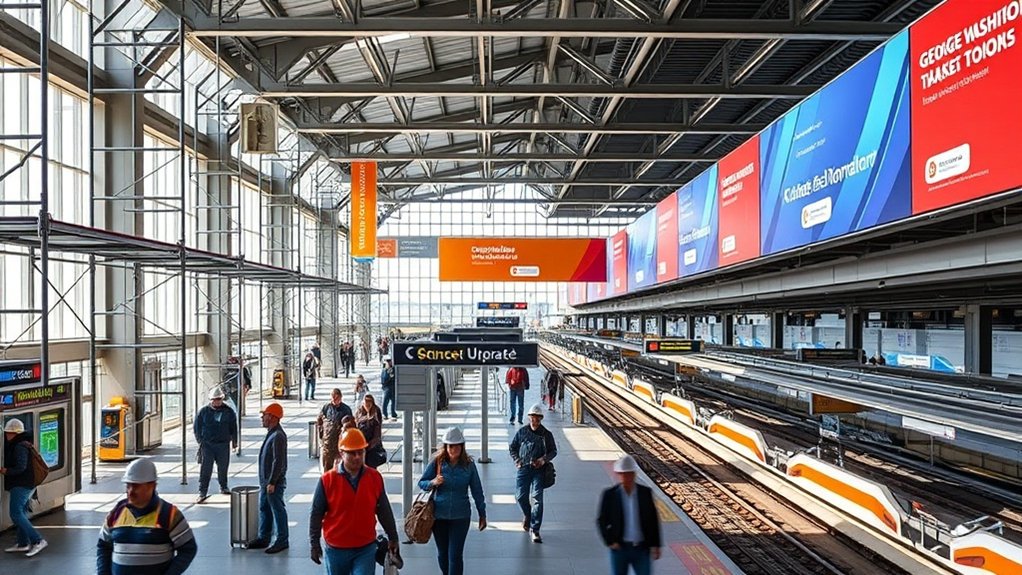
You’ll find the renovated George Washington Bridge Bus Station features an expanded bus pavilion capable of handling 50% more capacity, serving approximately 5 million annual users through its consolidated operations.
The optimized passenger flow design incorporates climate-controlled waiting areas for 125 people and modernized ticketing infrastructure that significantly reduces boarding times. The redevelopment is part of Port Authority’s strategic plan for enhancing transportation facilities throughout the region.
Real-time information systems on video displays throughout the terminal provide immediate updates, enhancing both operational efficiency and passenger experience during peak travel periods.
Enhanced Bus Pavilion
The $183.2 million renovation has transformed the George Washington Bridge Bus Station into a high-capacity transit hub with operations completely consolidated to the rooftop level.
The fully enclosed, air-conditioned pavilion represents the most significant construction since the station’s 1963 opening, with pavilion aesthetics designed for both functionality and passenger comfort.
You’ll find the new pavilion accessible from both street and subway levels, featuring comprehensive bus shelter integration that enhances the waiting experience for approximately 5 million annual users.
The reconfigured space accommodates 50% more bus capacity with improved ADA compliance throughout all areas.
The state-of-the-art passenger information system keeps you informed of arrivals and departures, while enhanced mechanical systems ensure reliability.
This centralized layout significantly reduces bus turnaround delays through optimized traffic flow patterns.
Optimized Passenger Flow
While the enhanced bus pavilion provides structural improvements, passenger movement efficiency stands at the heart of the station’s functionality.
The $183 million redevelopment has consolidated bus operations into an efficient layout accommodating 50% more capacity and approximately 5 million annual users.
You’ll now navigate through a reconfigured station with strategically designated platforms—third-level at Broadway and second-level at Fort Washington Avenue—creating optimized passenger flow throughout the terminal.
Vertical circulation enhancements include new elevators and escalators connecting all levels, eliminating accessibility barriers.
Real-time monitoring systems provide instant updates on bus arrivals and platform status, reducing uncertainty during delays.
The comprehensive wayfinding infrastructure, completed in 2017, features intuitive signage designed specifically to manage traffic flow and guide your movement between levels, ensuring smoother transitions throughout your journey.
Architectural Preservation Meets Modern Design
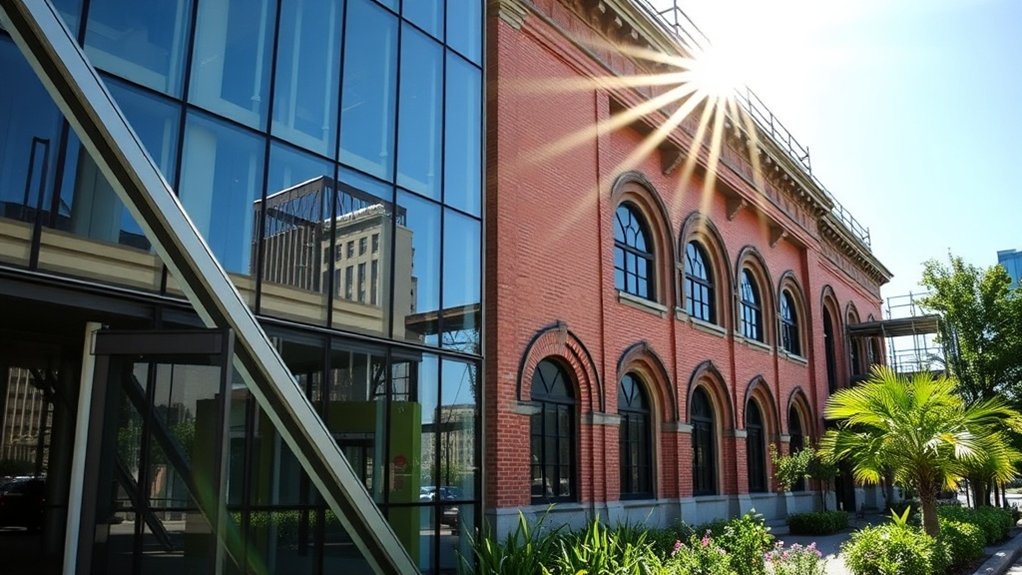
Despite being an unprotected architectural treasure, Pier Luigi Nervi’s 1963 George Washington Bridge Bus Station received meticulous preservation attention during its $183.2 million renovation.
The PANYNJ Architectural Unit collaborated with NYC Landmarks Preservation Commission to maintain Nervi’s signature elements—including angled concrete columns, butterfly-like roofscape with 14 triangular projections, and distinctive striated concrete surfaces.
Preservation techniques balanced historical significance with modern aesthetics by maintaining the concrete masterpiece’s integrity while integrating contemporary elements.
You’ll notice how the renovation team reconfigured the bus concourse, installed state-of-the-art information systems, and added a passenger pavilion with direct bridge views—all while respecting the original structure.
This integration transformed a formerly forbidding space into a welcoming environment that serves both travelers and the local community, successfully marrying Nervi’s extraordinary design with today’s transportation needs.
Infrastructure and Utility System Overhauls
Beyond aesthetic renovations, comprehensive infrastructure overhauls transformed the George Washington Bridge Bus Station into a modern transit hub.
You’ll notice utility upgrades throughout, including advanced electrical systems and integrated data infrastructure that support today’s operational demands.
The project enhanced roadway networks with rehabilitated 178th and 179th street ramps, reconstructed bus turnarounds, and optimized traffic flow configurations.
Infrastructure efficiency improvements extend to the multi-level parking garage and dedicated bus staging areas, designed for streamlined fleet management.
For pedestrians, you’ll benefit from the elevated bridge connecting directly to New Terminal One, protected walkways, and non-slip surfaces enhancing safety.
The station’s utility systems now align with environmental standards while facilitating seamless transportation integration through coordinated traffic signals and real-time transit information infrastructure.
Passenger Experience and Accessibility Enhancements
You’ll find comprehensive wayfinding systems throughout the redesigned GWB Bus Station that help direct passenger flow across multiple levels.
The full ADA compliance overhaul addresses previous accessibility limitations, with new ramps, elevators, and tactile guidance replacing the stairs-only underground passage.
These optimization improvements work together with the architectural integration elements to streamline passenger movement between the modernized bus platforms, retail areas, and connecting transportation options.
Modern Wayfinding Systems
A comprehensive wayfinding system forms the backbone of the George Washington Bridge Bus Station’s 2017 renovation, addressing the navigational needs of its 20,000 daily passengers.
The $183.2 million redevelopment integrates digital navigation through real-time displays showing bus schedules and service disruptions alongside strategic physical elements.
You’ll find the reconfigured concourse layout separates boarding and alighting areas with color-coded directional markers corresponding to specific platforms.
The system leverages Nervi’s original 1963 concrete structures as visual landmarks while implementing consistent typography and iconography standards throughout.
For subway connections, illuminated pathway indicators and multilingual signs direct you to the 175th and 181st Street stations.
This user engagement approach combines architectural elements with modern information displays, creating intuitive sightlines from the passenger pavilion to your arriving bus.
ADA Compliance Overhaul
The George Washington Bridge Bus Station’s comprehensive ADA compliance overhaul represents a fundamental reimagining of the facility’s accessibility infrastructure.
Following extensive accessibility audits, the $152 million infrastructure investment transformed vertical circulation with compliant escalators, elevators, and heated glass canopies protecting passengers at departure platforms.
You’ll find reconstructed sidewalks on both sides of the bridge, featuring tactile warning surfaces and continuous accessible pathways connecting all transit points.
Though the original terminal was wheelchair-accessible, the renovation expanded this foundation with modern standards throughout the 120,000 square feet of retail space.
The Port Authority’s commitment extends beyond physical modifications, implementing WCAG 2.1-compliant information displays and establishing dedicated quality assurance protocols through their design and construction standards units to ensure ongoing ADA compliance.
Multi-Level Flow Optimization
Following extensive architectural reconfiguration, George Washington Bridge Bus Station now features a revolutionary multi-level flow system that fundamentally transforms how passengers navigate the facility.
You’ll find all bus operations consolidated on the third level, creating a unified concourse that eliminates redundant circulation paths and simplifies your journey.
The multi-level design strategically separates transit functions across three floors while maintaining visual connectivity throughout. When you ascend via the new escalators or stairs, you’ll immediately see your bus upon reaching the concourse.
This efficient navigation system accommodates 50% more buses within the same footprint while serving 5 million annual passengers.
The ground floor now offers four times more retail space, creating a destination that enhances your experience without interfering with the streamlined vertical passenger flow.
Construction Timeline and Phasing Strategy
While initial proposals for the George Washington Bridge Bus Station emerged in 1955, construction officially began after a $9.6 million contract was awarded in December 1960, with completion achieved on January 17, 1963.
The modern renovation, starting with planning in 2004, faced significant construction delays. The $183 million project (split between PANYNJ and developers) began construction in 2012 with a 2013 completion target, but wasn’t finished until May 2017—two years late and $17 million over budget.
You’ll notice the renovation employed staged phasing to maintain continuous bus operations throughout construction. The August 2014 major closure established temporary facilities while workers reconfigured the vertical circulation system, eliminating the inefficient separate staircase design.
This phased approach allowed for simultaneous development of distinct retail and transit areas.
Economic Impact and Community Benefits
Despite initial budget overruns of $17 million, the $183 million redevelopment investment completed between 2014-2017 has generated substantial economic returns throughout Washington Heights.
UMEZ’s $5 million loan specifically targeted facility renovations that catalyzed broader economic revitalization in the area.
You’ll notice increased business activity surrounding the terminal, with expanded retail space creating new revenue streams and entrepreneurial opportunities.
The modernized infrastructure has transformed the station into a vital community hub while improving accessibility for diverse users.
Community engagement efforts paid off through practical improvements: reconfigured bus gates reduced congestion, enclosed waiting areas enhanced safety, and optimized operations minimized vehicle emissions.
The project’s long-term impact extends beyond the terminal itself, strengthening regional connectivity between New York and New Jersey while positioning Washington Heights for sustainable economic growth.