
Understanding the cost of spray foam insulation for your home is essential for homeowners aiming to enhance energy efficiency and reduce long-term utility bills. The decision to upgrade home insulation involves multiple variables, including insulation material type, thickness, and installation method. Spray foam insulation, known for its superior sealing capabilities and high R-value, is increasingly popular but often misunderstood in terms of pricing structure. Unlike traditional insulation materials, spray foam costs are calculated based on volume (board feet) instead of square footage, which can lead to confusion and unexpected expenses if homeowners are unaware. This guide breaks down the key factors affecting spray foam insulation cost, highlights the difference between open-cell and closed-cell foam types, and explores additional installation-related variables. Understanding these elements empowers property owners to make informed choices that maximize home energy savings and deliver significant comfort improvements.
In today’s building environment, investing in effective insulation offers substantial cost benefits by cutting heating and cooling expenses often ranging between 10% and 30%. This is especially relevant with evolving U.S. building codes and an increased focus on sustainable construction practices. Homeowners, contractors, and investors benefit from grasping how spray foam insulation’s price metrics function, how installation complexity impacts the bottom line, and how the right insulation choice aligns with specific regional climate conditions. Real-world examples, practical tips, and industry-standard pricing insights accompany this analysis to help readers navigate the nuances of spray foam insulation in 2026.
Key points at a glance:
- Spray foam insulation is priced per board foot (volume), not square foot (area), a crucial distinction for budgeting.
- Open-cell foam costs range from $0.40 to $0.60 per board foot; closed-cell foam ranges from $1.00 to $1.60.
- Installation price varies significantly based on job size, removal needs, height access, and masking for finished homes.
- Closed-cell foam offers higher R-value and additional benefits like water resistance and structural strength.
- Home energy savings from spray foam insulation contribute to offsetting the upfront cost over time.
Breaking Down Spray Foam Insulation Costs: Board Feet Versus Square Footage Explained
Understanding the pricing methodology behind spray foam insulation is fundamental for homeowners and contractors assessing installation costs. Unlike conventional insulation products such as fiberglass batts or cellulose, which are charged by square footage, spray foam is billed based on board feet. This means the cost depends on both the surface area and the thickness of the foam layer applied. The formula is straightforward:
Board Feet = Area (sq ft) × Thickness (inches)
For example, if you have an attic space of 1,000 square feet that requires 10 inches of open-cell foam to achieve an R-38 insulation rating, the contractor will calculate the volume needed as 10,000 board feet rather than simply 1,000 square feet. Pricing per board foot typically ranges:
| Foam Type | Typical Price Range (per Board Foot) | Average R-Value (per inch) | Common Applications |
|---|---|---|---|
| Open-Cell Foam | $0.40 – $0.60 | ~3.7 | Interior walls, roof decks in moderate climates, soundproofing |
| Closed-Cell Foam | $1.00 – $1.60 | ~7.0 | Exterior walls, basements, crawl spaces, metal buildings |
This pricing method means that a seemingly low per-unit cost can quickly multiply based on foam thickness. A $0.50 per board foot estimate might appear inexpensive until the actual material volume is calculated. Contractors often provide quotes based on board feet without emphasizing this distinction, which can lead homeowners to misunderstand their eventual expenses.
Moreover, job specifics such as different wall depths, presence of windows and doors, and roof slope all affect the total board footage and thus the final project cost. Modern tools and calculators help clients get precise estimates keyed to their home’s unique dimensions, eliminating guesswork.
For more detailed insights on this topic, exploring resources like HomeAdvisor’s spray foam insulation pricing breakdown offers in-depth market averages and contractor advice for typical U.S. projects.
Comparing Open-Cell and Closed-Cell Foam: Price and Performance Tradeoffs
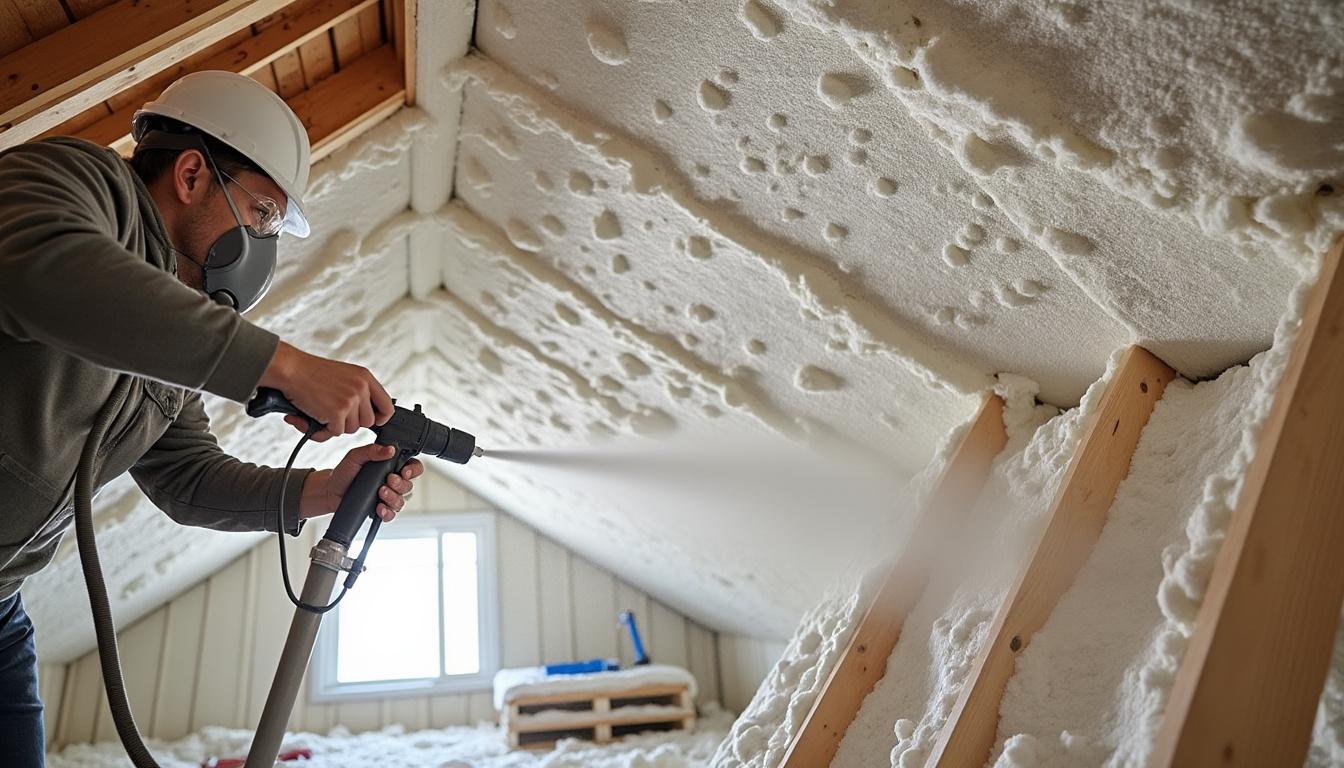
Choosing between open-cell and closed-cell spray foam is pivotal when evaluating installation price against performance outcomes. Each foam type exhibits distinct physical characteristics, R-values, moisture resistance, and energy savings potential.
Open-Cell Spray Foam: Cost-Effective Sound Barrier and Thermal Solution
Open-cell foam remains the budget-friendly option among spray foam insulations, with installation prices averaging between $0.40 and $0.60 per board foot. This foam expands significantly (up to 100 times its volume), an advantageous quality that allows it to fill cavities and seal air leaks comprehensively in attics and interior walls.
Its R-value is approximately 3.7 per inch, which, while lower compared to closed-cell foam, still improves home energy efficiency substantially when applied at sufficient thickness, typically around 6 to 10 inches for attic insulation. Open-cell foam also offers excellent sound-dampening qualities, making it a favorite for interior walls where noise reduction matters.
There are limitations, however: open-cell foam is not a moisture barrier, is unsuitable for below-grade applications like crawl spaces, and does not add significant structural strength. It is more permeable to water vapor, requiring complementary vapor barriers in humid climates.
Cost Example:
- For a 2,000 sq ft attic floor insulated with 6 inches of open-cell foam, the required volume is 12,000 board feet, producing an estimated cost range of $4,800 to $7,200.
Closed-Cell Spray Foam: Premium Investment with Long-Term Savings
Closed-cell foam commands a higher price range, generally $1.00 to $1.60 per board foot, but provides substantial benefits worthy of its premium. Its R-value is roughly 7.0 per inch, almost double that of open-cell varieties. This higher R-value means less material is required to achieve the same thermal resistance, which can balance out installation price differences.
Not only does closed-cell foam act as an effective vapor barrier, but it also enhances structural rigidity, making it ideal for exterior walls and challenging spaces such as basements or metal buildings. Its water resistance curtails moisture buildup and mold risk, an important consideration in many American climates today.
Cost Example:
- Insulating the walls of a metal shop measuring 30×40 feet (approx. 1,680 square feet surface) with 2 inches of closed-cell foam typically requires over 3,360 board feet, leading to an estimated cost between $4,000 and $6,000 including waste factors for metal corrugation surfaces.
The upfront cost for closed-cell foam can be offset by increased savings on heating and cooling bills, along with the added value it brings to property durability and resale appeal. Understanding these dynamics is crucial when evaluating the total cost versus long-term cost benefits of each foam type. For more comprehensive comparisons, visit Modernize’s guide on spray foam insulation types.
Hidden Cost Drivers: Installation Challenges and Additional Expenses
Beyond basic material and labor costs, several less visible factors can influence the total installation price of spray foam insulation. Recognizing these cost drivers prepares homeowners for accurate budget planning and meaningful contractor discussions.
- Old Insulation Removal and Disposal: Removing existing fiberglass or cellulose insulation, often necessary in retrofit projects, adds $1.00 to $2.00 per square foot to the bill due to labor intensity and disposal fees.
- Minimum Job Size Charges: Contractors often impose trip minimums because of equipment costs and travel time. For small projects such as insulating a single wall, expect a minimum fee in the $2,000 to $2,500 range.
- Height and Accessibility: Attics or ceilings more than 20 feet high require scaffolding or lifts, increasing labor hours and cost due to safety requirements and slower application speed.
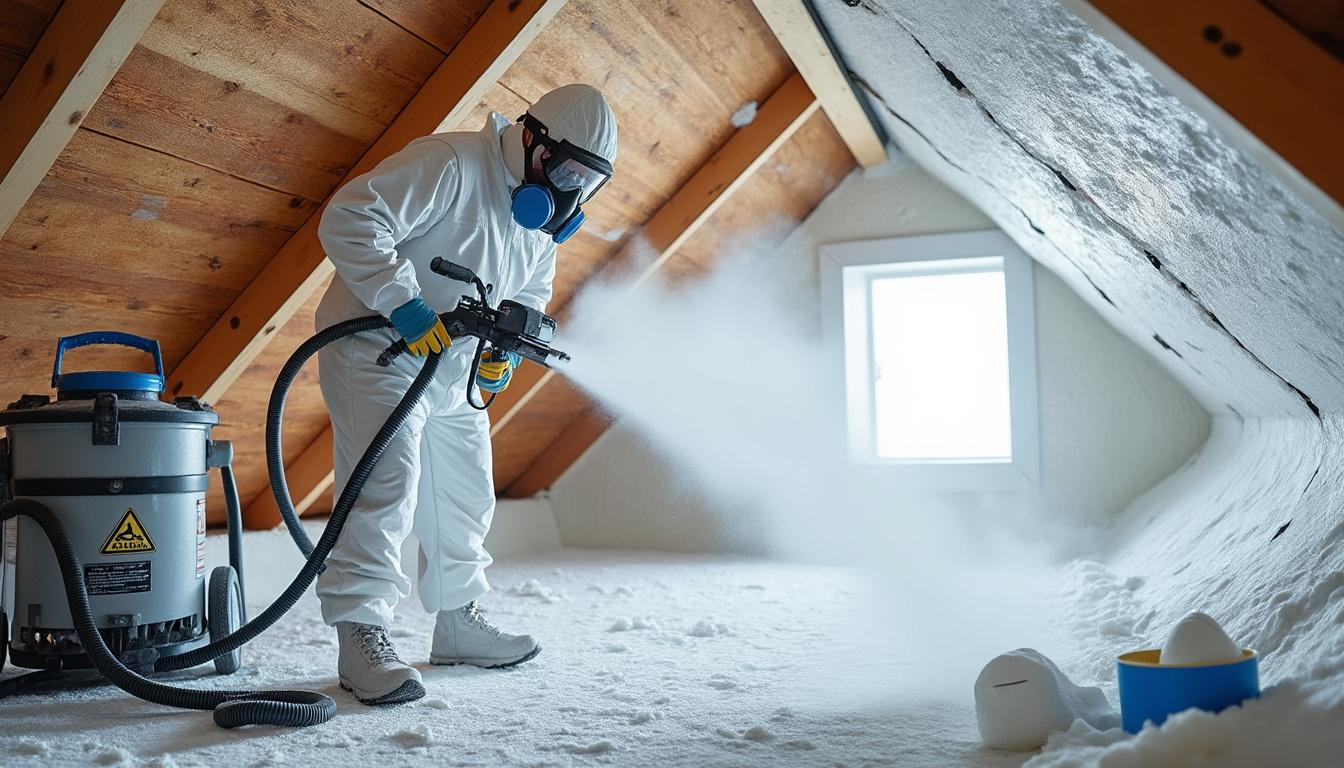
- Masking and Protection in Finished Spaces: Installing spray foam in homes with existing drywall, flooring, or furnishings demands extensive masking and ventilation. This preparatory work involves significant labor that can inflate total project cost.
Homeowners facing unexpectedly high bids should inquire about these factors with their contractors, as they explain why quotes sometimes surpass average market prices. Getting multiple quotes and using detailed input calculators can help reduce surprise expenses.
Real-World Examples and Calculations for Accurate Budgeting
Consider the case of a homeowner in Ohio retrofitting their 1,200 sq ft attic for improved energy efficiency. Using 8 inches of open-cell foam to reach an R-value of around 30, the volume needed is 9,600 board feet. At a mid-range price of $0.50 per board foot, material and labor would cost approximately $4,800. However, if removal of old fiberglass batting is required at $1.50 per square foot, an additional $1,800 is added.
In contrast, another homeowner in Texas might opt for 3 inches of closed-cell foam on basement walls totaling 800 sq ft. The volume equals 2,400 board feet. At $1.40 per board foot, the cost is $3,360 for insulation. If no removal or difficult access fees apply, this installation may be straightforward.
| Project Type | Area (sq ft) | Foam Type | Thickness (inches) | Board Feet Required | Estimated Cost Range |
|---|---|---|---|---|---|
| Attic Insulation | 1,200 | Open-Cell | 8 | 9,600 | $3,840 – $5,760 |
| Basement Walls | 800 | Closed-Cell | 3 | 2,400 | $2,400 – $3,840 |
| Metal Building Walls | 1,680 | Closed-Cell | 2 | 3,360 | $4,000 – $6,000 |
These examples illustrate how varying home characteristics and foam choices impact budget needs. Each case demands tailored planning, which can be supported by automated cost calculators and professional estimates available on trusted platforms like HomeGuide.
Maximizing Home Energy Savings and Return on Investment with Spray Foam Insulation
Spray foam insulation is a transformative upgrade for home energy efficiency. Properly installed, it drastically reduces air leakage, improves indoor comfort, and lowers heating and cooling costs. Studies show that homes insulated with spray foam experience energy savings ranging from 10% up to 30% annually, depending on home age and climate zone.
Although the initial installation price for spray foam insulation is generally higher than traditional insulation forms, the durable, all-season benefits often yield rapid payback through reduced energy bills. For homeowners contemplating renovation or new construction, the long-term cost benefits often justify selecting closed-cell spray foam despite its premium price.
Additional advantages include:
- Improved air quality by reducing dust, mold, and allergens infiltration.
- Increased structural strength, especially with closed-cell foam applications.
- Vapor barrier properties helping mitigate moisture damage.
To further boost cost-effectiveness, homeowners should explore integrating rim joist insulation and vapor barriers tailored to their local climate. Educational resources on insulation options for specific building types, like pole barns or metal roofs, provide valuable perspectives on optimizing insulation strategies and energy savings.
For latest insights on enhancing home comfort and energy efficiency with quality insulation, visit industry blogs such as All Year Insulation’s guide on rim joist insulation and detailed articles covering the benefits of various R-value options.