
Understanding the complex relationship between spray insulation R value and its effect on energy efficiency has never been more crucial. As homeowners and builders tackle rising energy costs and strive for sustainable living spaces, mastering how insulation materials contribute to a home’s thermal resistance becomes essential. Spray insulation stands out by offering not only remarkable heat transfer resistance but also exceptional air sealing, making it an indispensable component of an efficient building envelope. This article explores the nuances of spray insulation R value, illustrating its significance in ensuring temperature control and delivering meaningful energy savings. Through detailed comparisons, real-world examples, and expert insights, readers will gain a solid grasp of spray foam’s role in modern home insulation solutions.
Key points to understand:
- Spray insulation R value measures how well spray foam resists heat flow, directly impacting indoor comfort and energy bills.
- Its unique ability to seal air leaks creates a tighter building envelope, enhancing overall thermal resistance beyond traditional insulation.
- Understanding differences between open-cell and closed-cell spray foam is vital for choosing the right insulation based on location, moisture concerns, and budget.
- Long-term energy savings from spray foam stem not only from initial R value but its durability and prevention of heat loss through air infiltration.
- Proper installation by certified professionals ensures the full benefits of spray insulation are realized, maintaining effective temperature control year-round.
Decoding Spray Insulation R Value: Thermal Resistance and Heat Transfer Explained
The concept of R value serves as a fundamental benchmark for anyone involved in home insulation, defining thermal resistance — that is, the ability of an insulation material to slow down heat transfer. Higher R values indicate superior performance, minimizing unwanted heat escaping during colder months and reducing heat influx in warm weather. Spray insulation typically outperforms conventional options because it combines solid thermal resistance with excellent air-sealing capability, protecting homes from inefficient heat exchange.
Heat always moves from warmer zones to cooler ones; this natural process mandates that effective insulation acts as a barrier to keep indoor temperatures stable. Many traditional insulation materials, such as fiberglass or cellulose, claim competitive R values, but their real-world efficiency often suffers due to air gaps, settling, or moisture accumulation. Spray foam insulation, however, expands after being applied, filling every nook and cranny, dramatically reducing air leakage which otherwise compromises thermal resistance.
In 2026, widespread adoption of spray foam insulation is increasingly related to its superior real-life R value performance, supported by enhanced building codes prioritizing airtightness. By forming a continuous seal, spray foam preserves the R value it advertises far better than batts or blown-in alternatives, which sometimes lose effectiveness over time. For homeowners aiming for optimal energy efficiency, understanding how spray insulation functions at a microscopic level reveals why it can form one of the most reliable components in your home insulation strategy.
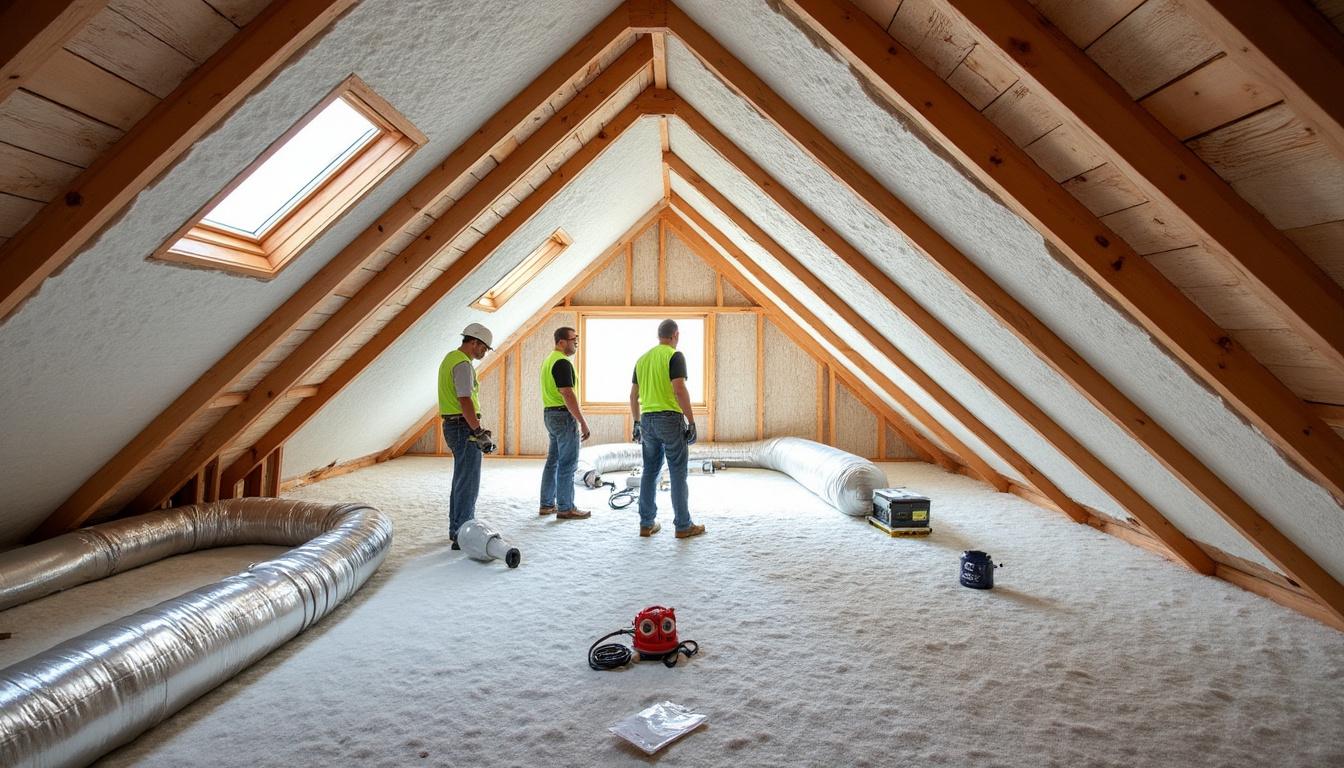
Open-Cell vs. Closed-Cell Spray Foam: R Value, Application, and Energy Efficiency Impacts
Spray insulation comes primarily in two formats: open-cell and closed-cell foam, each offering distinct R values and performance attributes that affect overall energy savings and durability. Choosing between these foam types requires evaluating thermal needs, moisture conditions, and space availability to optimize both the material’s effectiveness and cost efficiency.
Open-cell spray foam is characterized by a less dense structure, providing R values usually ranging between 3.5 and 3.8 per inch. Its softer composition offers superior sound dampening and flexibility, making it ideal for interior walls or areas where moisture control is less critical. However, because it allows some vapor permeability, it is less suitable for damp environments or exterior walls subject to water intrusion.
By contrast, closed-cell spray foam is denser and rigid, boasting R values generally between 6.0 and 7.0 per inch—nearly double that of open-cell varieties. This type forms a robust vapor barrier, maintains its shape without sagging or compressing, and even enhances structural integrity. These features make closed-cell foam particularly appropriate for attics, crawl spaces, and exterior wall insulation, where moisture resistance and maximum thermal resistance are a priority.
For example, a homeowner in a humid region like Florida might prefer closed-cell foam in crawl spaces to prevent moisture-related degradation, while a property owner focusing on soundproofing between rooms might opt for open-cell application. The decision often balances up-front material cost with desired energy efficiency and long-term insulation stability. Information on detailed spray foam options and their comparative R values is available from specialist resources such as trusted spray foam insulation guides.
Understanding these distinctions helps maintain temperature control throughout the year, cutting down HVAC cycling frequency and delivering consistent home comfort that traditional insulation struggles to achieve due to gaps or compression.
How Spray Insulation Enhances Building Envelope Integrity and Drives Energy Savings
Beyond its impressive R value, spray insulation’s greatest advantage lies in its ability to drastically reduce air infiltration, which conventional insulation materials cannot fully address. Air leaks around doors, windows, framing, and other structural penetrations can cause substantial heat loss, inefficient HVAC operation, and discomfort due to drafts or uneven temperatures.
Spray foam insulation expands immediately upon application, sealing irregular cavities and gaps to form a continuous airtight membrane that strengthens the entire building envelope. This comprehensive sealing prevents heat transfer not only through conduction but also via convection, an area where lower-quality insulation often fails. As a result, spray foam insulation ensures that the rated R values translate to actual performance.
In practical terms, homes treated with spray foam typically demonstrate energy savings up to 30% compared to those insulated only with traditional batt or blown-in materials. The reduction in heating and cooling load extends equipment lifespan by limiting HVAC system overuse and also cuts monthly energy bills, which is especially important in regions with extreme seasonal temperature swings.
Successful implementation of spray insulation requires a detailed understanding of a home’s specific air and moisture challenges as well as proper installation methods. Professional installers adhere to recommended thickness guidelines and use precise application techniques to maximize both R value and air sealing. Those interested in exploring how spray foam insulation can contribute to robust energy efficiency are encouraged to consult reliable industry resources such as energy efficiency experts for up-to-date best practices and technology advancements.
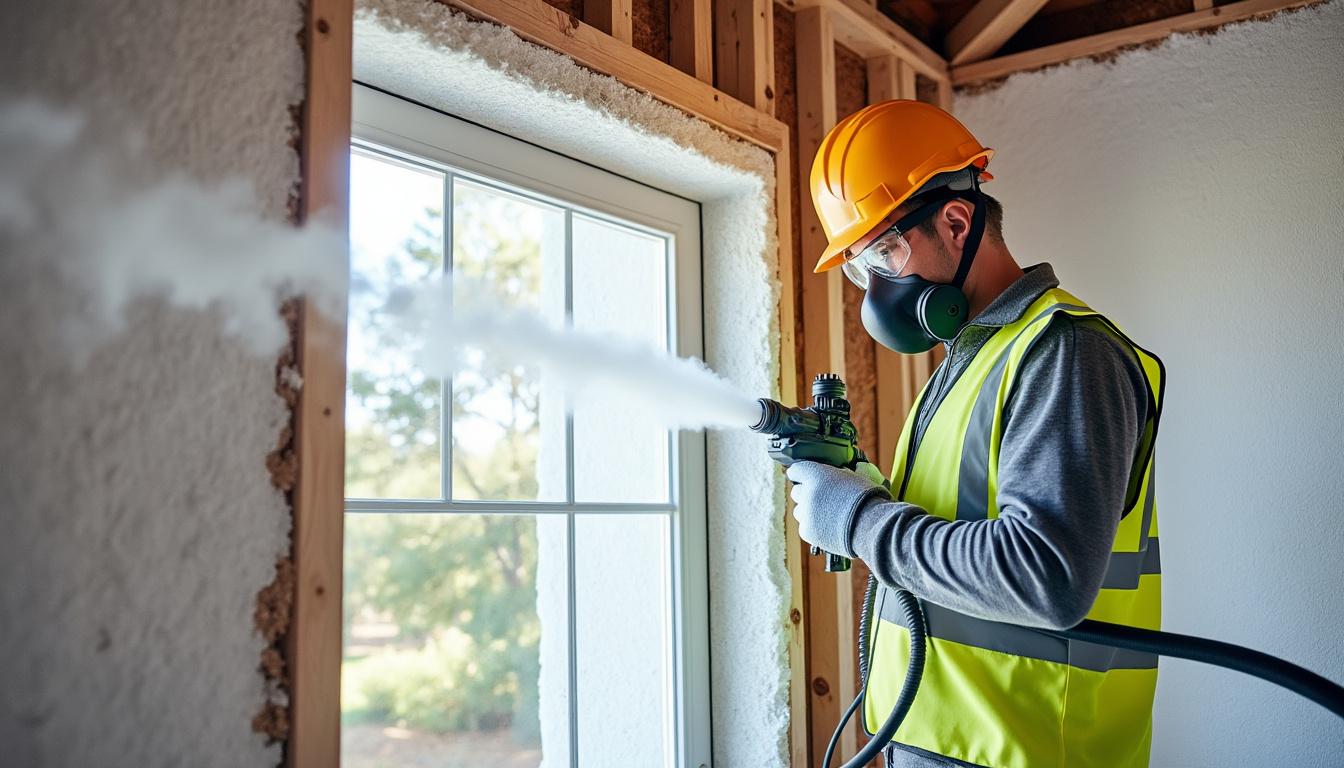
Tailoring Spray Foam Insulation to Different Home Areas: Attics, Walls, and Crawl Spaces
Every part of a home experiences unique exposure to environmental conditions, requiring customized application of insulation materials to maximize thermal resistance and energy savings. Attics, for example, are among the most critical spaces for insulating since heat naturally rises and escapes through the roof if not properly sealed. Incorporating high-R-value closed-cell spray foam in attics blocks heat transfer and traps conditioned air, keeping the upper levels comfortable and reducing energy waste significantly.
Exterior walls generally require insulation that balances thermal resistance with vapor permeability to avoid moisture buildup inside wall cavities. Applying mid-depth open-cell spray foam offers an ideal solution in many cases, providing sufficient insulation with the added benefit of noise reduction. However, in climates prone to moisture intrusions, closed-cell foam is advantageous as it protects against vapor and water damage.
Crawl spaces and basements face a particular challenge with humidity and moisture. Closed-cell spray foam is typically recommended due to its vapor barrier properties and ability to maintain consistent R value even in damp conditions. Effective crawl space insulation not only enhances energy efficiency but also contributes to indoor air quality by reducing mold risk.
Each zone demands attention to insulation thickness, installation quality, and material selection to achieve optimal performance. Homeowners upgrading or retrofitting their insulation may benefit from professional assessments to customize spray foam applications based on local climate and building design. More detailed strategies for specific home zones can be explored in articles focused on new construction and retrofit insulation techniques, helping readers make informed decisions tailored to their needs.
Comparing Spray Foam R Value with Traditional Insulation: Costs, Durability, and Long-Term Benefits
While fiberglass batts and cellulose insulation remain popular due to lower initial costs, understanding the true long-term value of spray foam is essential when evaluating insulation investments. Spray foam provides significantly higher R value per inch, but more importantly, maintains performance year after year through superior adhesion and resistance to settling or compression.
Fiberglass batts typically offer between R-2.5 and R-3.0 per inch, but these materials are prone to sagging or leaving gaps, allowing air to bypass insulation and undermine energy efficiency. Blown-in cellulose might start at R-3.2 to R-3.7 but often settles over time, decreasing effective coverage and thermal resistance. In contrast, closed-cell spray foam ranges from R-6.0 to R-7.0 per inch and remains stable while also providing an air and moisture barrier.
| Insulation Type | Approximate R Value per Inch | Air Sealing Ability | Long-Term Performance |
|---|---|---|---|
| Open-Cell Spray Foam | 3.5 – 3.8 | Excellent | High |
| Closed-Cell Spray Foam | 6.0 – 7.0 | Excellent | Very High |
| Fiberglass Batts | 2.5 – 3.0 | Low | Moderate |
| Blown-In Cellulose | 3.2 – 3.7 | Low | Moderate |
Though spray foam entails a higher upfront investment, the resulting energy savings, durability, and enhanced indoor comfort often justify the cost by reducing heating and cooling expenses over decades. Additionally, as increasingly stringent U.S. building codes mandate tighter building envelopes and better thermal performance, spray foam insulation positions properties for higher resale value and increased market competitiveness.
Correct installation is key to realizing these benefits. Even the best insulation will underperform if applied unevenly or without proper thickness, so hiring trained professionals ensures that your investment delivers long-lasting energy efficiency, comfort, and structural protection.