
Accurate energy efficiency in home insulation starts with precise planning and reliable measurement tools. As 2026 ushers in modern advancements in construction and sustainability, homeowners and contractors alike strive for cost-effective and environmentally conscious solutions. One of the key instruments in this pursuit is the blown-in insulation calculator—a sophisticated yet user-friendly tool designed to streamline project planning by offering exact dimensions and estimates tailored to your space. By utilizing a calculator that incorporates vital factors such as R-value, insulation thickness, and material type, users can significantly reduce guesswork, optimize insulation installation, and control costs.
Blown-in insulation is now a staple in American building practices, valued for its efficient application and effectiveness in filling cavities that traditional insulation often misses. Understanding how to harness an insulation calculator enables better decision-making about your material needs, ensuring that you invest wisely while enhancing your building’s thermal performance. This technology-driven approach supports sustainability goals, helping to minimize heat loss and unnecessary energy consumption. The following sections delve into practical uses, calculation methodologies, material considerations, and real-world applications that underscore the indispensable role of the blown-in insulation calculator in today’s insulation landscape.
In brief:
- Blown-in insulation calculators provide precise material and cost estimates by factoring in area size, R-value targets, and existing insulation.
- Choosing the correct insulation thickness is crucial for optimal energy efficiency and controlling heat loss, which the calculator helps to determine.
- Different insulation materials such as cellulose and fiberglass have distinct R-values per inch, affecting required bag counts and installation depth.
- Using these calculators simplifies budgeting and aids homeowners, contractors, and DIY enthusiasts in planning effective insulation installations.
- Integrating calculators with local building codes and energy standards improves overall project accuracy and compliance.
Understanding the Role of a Blown-In Insulation Calculator in Home Insulation Projects
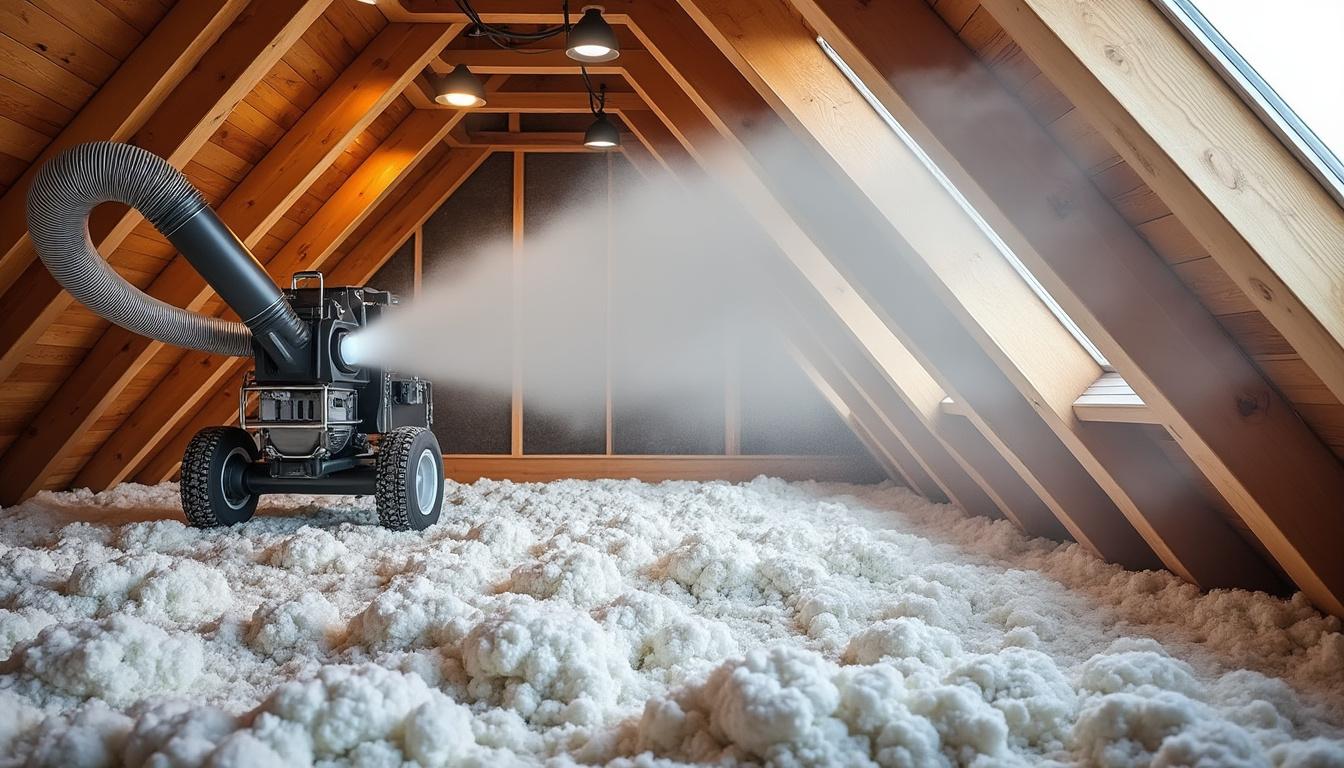
Blown-in insulation has become a primary approach in enhancing thermal performance in both residential and commercial structures across the United States. This loose-fill insulation material, typically cellulose or fiberglass, is blown into attics, walls, or crawl spaces, allowing for a seamless layer that minimizes air infiltration. Among the essential factors influencing the success of such insulation projects is the ability to generate accurate estimates for materials and costs. Here, a blown-in insulation calculator is invaluable.
A blown-in insulation calculator functions by asking the user for key inputs: the size of the space (in square feet), the type of insulation to be used, the current insulation’s R-value (if any), and the target R-value required based on climate and building codes. With this information, the calculator determines the insulation thickness needed, the volume of material to be installed, and the estimated number of bags of insulation necessary for completion. This process prevents over-purchasing, project delays, and waste, offering a more sustainable and financially responsible approach to insulation installation.
For example, a homeowner aiming to upgrade an attic in a northern U.S. climate could use the calculator to input their attic’s 1500 square feet, signify a desired R-value of 49 (commonly recommended for cold zones), and specify their existing insulation at R-19. The calculator would then compute the additional insulation thickness needed to achieve this upgraded value and provide a bag count tailored to the chosen material’s density and R-value per inch. This level of precision supports practical project planning, essential for energy efficiency and cost estimation.
Recognizing the variations in insulation materials is also critical. Cellulose, known for its higher R-value per inch (approximately 3.7), allows for thinner installation layers compared to fiberglass, which offers around 2.5 R-value per inch. Thus, a calculator helps users evaluate both materials’ implications, aiding in decisions that balance budgets with thermal comfort.
To explore this approach with a reliable tool, check out the detailed methodologies behind calculations on the blown-in insulation calculator explanations page or use an intuitive interface like the one offered by Neo Calculators blow-in insulation calculator to get immediate estimates for your project.
Mathematical Principles Behind Blown-In Insulation Calculators for Accurate Estimates
At the core of every blown-in insulation calculator is a set of calculations grounded in thermal physics and construction standards. The goal is to provide accurate numerical output that directly informs the quantity of insulation material and installation specifications. Here’s a detailed look at the essential mathematical concepts involved.
Calculating Additional R-Value Required
The starting point is determining how much extra insulation you need. This is a simple subtraction:
Additional R-Value = Desired R-Value – Current R-Value
This result indicates the incremental thermal resistance a project will provide. For instance, if your existing insulation offers R-11 and your target is R-38, you’ll need an additional R-27.
Determining Insulation Thickness
Different insulation materials confer different R-values per inch of thickness. For cellulose with an R-value per inch of 3.7, thickness needed can be found by dividing the additional R-value by the material’s R-value per inch:
Thickness Needed (inches) = Additional R-Value / R-Value per Inch
Using the previous example, to add R-27 using cellulose, you’d require about 7.3 inches.
Volume and Bag Count Calculations
Next, the volume of the insulation to be installed is calculated in cubic feet since insulation is sold by weight and volume. This is obtained by multiplying the area by the insulation’s thickness (converted to feet):
Volume Needed (cubic feet) = Area (sq ft) × Thickness (inches) / 12
After finding the volume, divide by the cubic feet covered by one bag of the material. For cellulose, one 25-pound bag covers roughly 48.8 square feet at a 10-inch depth, equating to an approximate volume per bag.
Bags Needed = Volume Needed ÷ Cubic Feet per Bag
The result is normally rounded up to ensure enough material. Coupled with the cost per bag, this leads to reliable cost estimation essential for budgeting.
Visualizing the key variables in a structured way helps make sense of these interactions:
| Variable | Description | Unit | Common Range |
|---|---|---|---|
| Area to Insulate | Total surface area | Square feet (sq ft) | 500 to 3,000+ |
| Desired R-Value | Target thermal resistance | R-value | R-30 to R-60 for attics, R-13 to R-21 for walls |
| Current R-Value | Existing insulation resistance | R-value | 0 to R-30 |
| R-Value per Inch | Material efficiency | R/inch | 2.2 to 3.8 |
| Cubic Feet per Bag | Coverage per package | Cubic feet (cu ft) | 40 to 60 (varies) |
| Cost per Bag | Price per unit | USD ($) | $25 to $50 |
This mathematical transparency not only boosts confidence in the results but also aids professionals and homeowners in customizing their projects with exact knowledge of the implications each choice carries.
Step-by-Step Guide on Using a Blown-In Insulation Calculator for Precise Cost and Material Estimation
Using a blown-in insulation calculator might appear straightforward, yet following an organized procedure guarantees maximized accuracy and actionable insights. Here’s a systematic walkthrough to help users extract the best results for any home insulation project.
Gather Basic Measurements and Information
Begin by accurately measuring the dimensions of the space you intend to insulate. For attics or floors, measure length and width then multiply for square footage. For walls, calculate the total cavity space across multiple rooms if necessary. Having a precise area reduces costly errors.
Assess Current Insulation and Set Target R-Value
Identify if existing insulation is present, measuring its depth and noting the type to estimate current R-value. If starting from scratch, the current R-value is zero. Consult regional building codes or national guidelines to determine the optimal R-value. This value varies widely based on your local climate and heating or cooling needs.
Choose Insulation Material and Input Cost Estimates
Select whether you’re planning to use cellulose, known for its environmental benefits and high R-value per inch, or fiberglass, which may require thicker installations. Research local prices to provide an accurate cost per bag input. This enables the calculator to give you tailored financial projections.
Use the Calculator and Interpret Outputs
Input all gathered data into the calculator. Within moments, it will generate:
- Total bags required — essential for purchasing
- Required insulation thickness in inches
- Additional R-value achieved after installation
- Estimated total cost for material needs
Review these outputs in the context of your building’s joist depth and budget to verify feasibility. Adjust inputs if necessary to explore alternative insulation scenarios or materials.
Tools like the Glow Calculator’s blow-in insulation tool or the Lowes blown-in insulation calculator provide interactive and practical platforms to execute these calculations for homeowners and contractors alike.

Factors Influencing Calculator Outputs and Ensuring Optimal Insulation Performance
While blown-in insulation calculators are highly reliable, various factors influence their outputs and the ultimate success of any insulation project. Knowing these can guide good decisions and identify when professional advice is warranted.
Area Accuracy and Impact
Inputs must include realistic dimensions. Overestimating surface area can lead to over-purchasing, unnecessarily raising costs and waste. Underestimating can lead to insufficient coverage, causing thermal weak points and higher energy bills. Always double-check measurements or use professional services for irregular spaces.
Choosing the Right R-Value for Climate Zone
The target R-value determines insulation thickness and material quantity, with colder zones needing higher values. The Department of Energy provides clear R-value guidelines based on geographic regions, making it crucial to apply correct figures to avoid under- or over-insulating.
Existing Insulation Condition and R-Value
If older insulation is compromised—due to moisture or settling—its actual R-value will be lower than nominal. Calculators count on accurate current R-value inputs; therefore, restoration or removal may be more economical than augmentation in some cases.
Material Selection and Density Variations
Cellulose and fiberglass differ both in performance and in packaging metrics. For instance, cellulose’s superior air-blocking ability and eco-friendliness often lead to preference in energy-efficient designs. This choice directly alters thickness and bag calculations.
Installation Method and Experience
Proper installation ensures the targeted R-value is achieved. DIY installations require skill and equipment rental; professional installers may guarantee coverage and compaction quality, indirectly affecting calculator results with actual installed thickness.
Understanding these influences encourages users to treat calculator outcomes as informed estimates rather than absolutes, preserving flexibility in project planning and enhancing the home insulation upgrading experience.
Benefits of Using a Blown-In Insulation Calculator for Energy Efficiency and Cost Management
In the evolving 2026 housing and construction market, energy efficiency holds greater priority than ever. A blown-in insulation calculator is a strategic tool in achieving these goals by aligning material use with precise need, thus minimizing energy waste and reducing project expenses.
Key benefits include:
- Optimized Insulation Thickness: Prevents common errors like under or over-insulating that lead to heat loss or wasted money.
- Accurate Cost Estimation: Provides detailed budgeting control, empowering homeowners and contractors to plan and execute without unforeseen expenses.
- Enhanced Material Efficiency: By calculating accurate bag numbers, it minimizes surplus insulation waste, contributing to sustainability efforts.
- Improved Energy Savings: Properly insulated homes maintain temperature better, cutting heating and cooling costs significantly over time.
- Informed Choices Between Materials: Side-by-side comparison features allow practical evaluation between cellulose and fiberglass based on R-value and cost effectiveness.
Using a blown-in insulation calculator aligns perfectly with modern building codes and certifications aimed at reducing carbon footprints and improving home comfort. Integrating such tools into pre-build and retrofit projects has become standard practice, helping professionals and homeowners make sound investments with measurable returns.
For those planning a next insulation upgrade, leveraging advanced calculators improves not only the efficiency of your installation but also your confidence in estimated outcomes. For further insights into materials and installation techniques, the Greenfiber insulation calculator resource is an excellent reference.