
Choosing the right cellulose insulation blower is a critical step for homeowners and contractors aiming to improve home insulation with greater efficiency and quality results. As energy efficiency gains importance in residential constructions and renovations, the right blowing machine for cellulose insulation not only enhances thermal performance but also ensures consistent coverage and durability. Understanding the nuances of insulation blower machines—such as their capacity, power source, and compatibility with different insulation types—empowers consumers to make informed decisions that save both time and money while optimizing home comfort.
Cellulose insulation, widely praised for its environmental sustainability and superior sound control, requires specialized blowing equipment to ensure even distribution across attics, walls, and crawl spaces. Selecting the correct blower can dramatically affect installation speed, coverage uniformity, and the insulation’s long-term effectiveness. Whether you’re undertaking a DIY home improvement project or hiring professionals, this guide explores the diverse options and key considerations in choosing cellulose insulation blowers tailored to your unique home insulation needs.
Key Points At a Glance:
- Match the insulation blower to the specific installation type: loose-fill, dense-pack, or spray-applied cellulose.
- Consider machine capacity in pounds per hour to balance job size and frequency with production efficiency.
- Evaluate power options—electric, gas, or hybrid—to suit jobsite access and operational needs.
- Invest in critical accessories like hoses, nozzles, and remote controls to optimize workflow and precision.
- Maintenance practices are vital for consistent blower performance and long-term equipment durability.
Understanding Cellulose Insulation Blowers: Types and Installation Applications
At the core of a successful cellulose insulation project is selecting the right insulation blower tailored for specific applications. These machines propel loose-fill cellulose into attics, wall cavities, or other hard-to-access spaces, enhancing both thermal and acoustic properties of the home. However, the precise blower type and functionality must align with installation methods to avoid issues such as uneven coverage, settling, or wasted materials.
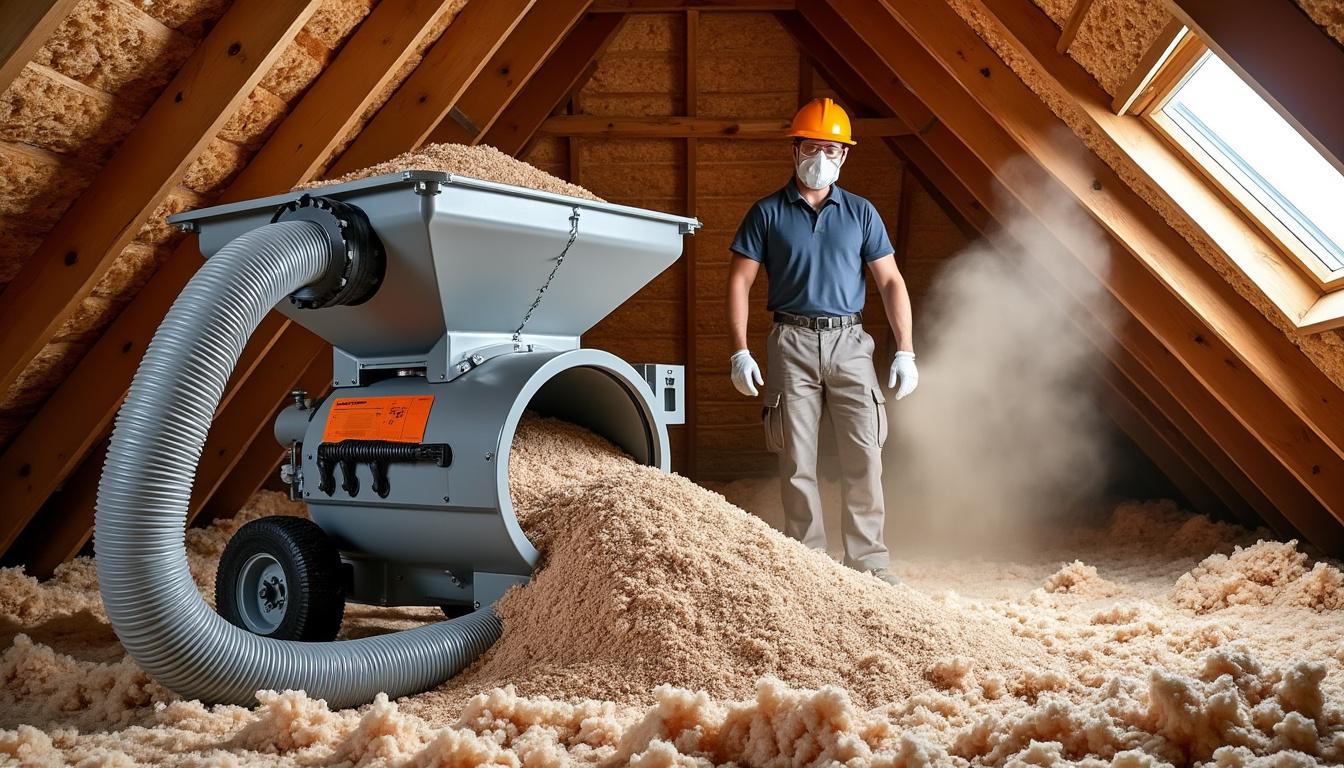
Loose-Fill Insulation Blowers are designed primarily for open attic installations. The focus here lies on maintaining consistent airflow and fluffing the material to maximize volume, rather than generating high pressure. Machines built for loose-fill applications prioritize high production rates—commonly above 1,000 lbs per hour—and large airlocks to feed continuous volumes of cellulose. This ensures the R-value targets are met swiftly and uniformly, minimizing cold spots and seasonal energy loss.
Dense-Pack Cellulose Installation requires considerably more pressure to compact insulation into wall cavities or flooring systems, preventing gaps or settling that can degrade the material’s insulating effect. For these jobs, insulation blowers must provide between 3.0 and 3.5 psi of pressure and feature strong, sealed airlocks to resist the backpressure created by tightly packed cellulose. Longer hose runs and multi-story projects increase blower power demands, so selecting a machine with sufficient motor strength is crucial for dense-pack applications.
Spray-Applied Cellulose Systems are the most technically demanding, combining high-pressure blowers with integrated water pumps to bind cellulose fibers with a light mist. These setups are typically used in new constructions to insulate open wall cavities before drywall is installed. Spray systems often incorporate dual hoppers with vacuum recycling for overspray recovery, improving material efficiency and reducing waste. Portability is another consideration for builders working on large-scale or multi-unit projects where quick setups minimize downtime.
These distinctions in cellulose insulation blower types highlight why matching machine capabilities with installation demands is fundamental. Professionals and homeowners benefit from understanding these requirements to avoid over- or under-powered equipment, which can lead to suboptimal insulating outcomes.
Balancing Blower Capacity and Power Supply with Your Home Insulation Needs
Choosing the best cellulose insulation blower for your home involves a thorough assessment of job scale, frequency, and power availability. Production rate, expressed in pounds per hour (lbs/hr), serves as a reliable benchmark for deciding on a blower’s capacity relative to your project scope.
Large-Scale and Frequent Installations benefit from heavy-duty blowers with capacities exceeding 2,000 lbs/hr coupled with hopper sizes around 15 to 20 cubic feet. Such robust machines enable insulation contractors or highly active homeowners to maintain steady material flow, significantly reducing downtime caused by reloading. Furthermore, pairing high-capacity blowers with adequately sized power sources ensures consistent operation without interruptions.
Small to Medium-Scale or Occasional Use typically calls for machines with capacities between 1,000 and 1,500 lbs/hr and hopper capacities ranging from 8 to 12 cubic feet. This size strikes a balance between portability and efficiency, making it ideal for remodeling projects or upgrades within smaller residential settings. Compact blowers are easier to transport, set up, and store when not in use, reducing logistical burdens for homeowners or contractors offering insulation as a secondary service.
Regarding power considerations, many residential insulations sites provide convenient access to electric circuits. Corded blowers running on standard 15- to 20-amp household outlets or generators up to 7,500 watts are popular for retrofit work or smaller crews. Conversely, rural or off-grid areas lacking electrical hookups often necessitate gas or diesel generators, or power-take-off systems linked to vehicle engines, although these are less common in typical home insulation projects.
High-volume professionals may require 120V or 240V circuits and industrial generators rated at 8,000 to 12,000 watts to sustain blower output for large jobs. Homeowners, however, typically focus on ensuring their chosen machine can operate within accessible power limits and provide sufficient capacity to complete home insulation efficiently and reliably.
| Installation Type | Recommended Blower Capacity (lbs/hr) | Typical Hopper Size (cu. ft.) | Power Source | Best Use Case |
|---|---|---|---|---|
| Loose-Fill Insulation | 1,000 – 2,000 | 12 – 20 | Electric or Generator | Attics and large open spaces |
| Dense-Pack Insulation | 1,500 – 2,500+ | 10 – 18 | Electric with high pressure capability | Wall cavities, floors |
| Spray-Applied Cellulose | 2,000+ | 15+ | Integrated water pump and power system | New builds and multi-unit projects |
By cross-referencing these parameters, homeowners can confidently select the optimal machine size and power characteristics tailored to their home insulation objectives, avoiding excessive costs or underperforming equipment.
Enhancing Insulation Installation with Essential Blower Accessories
Beyond the primary machine, various accessories facilitate efficient cellulose insulation application while promoting crew comfort and jobsite productivity. Careful equipment selection and layout design reduce waste, speeds up insulation projects, and improve final thermal performance of homes.
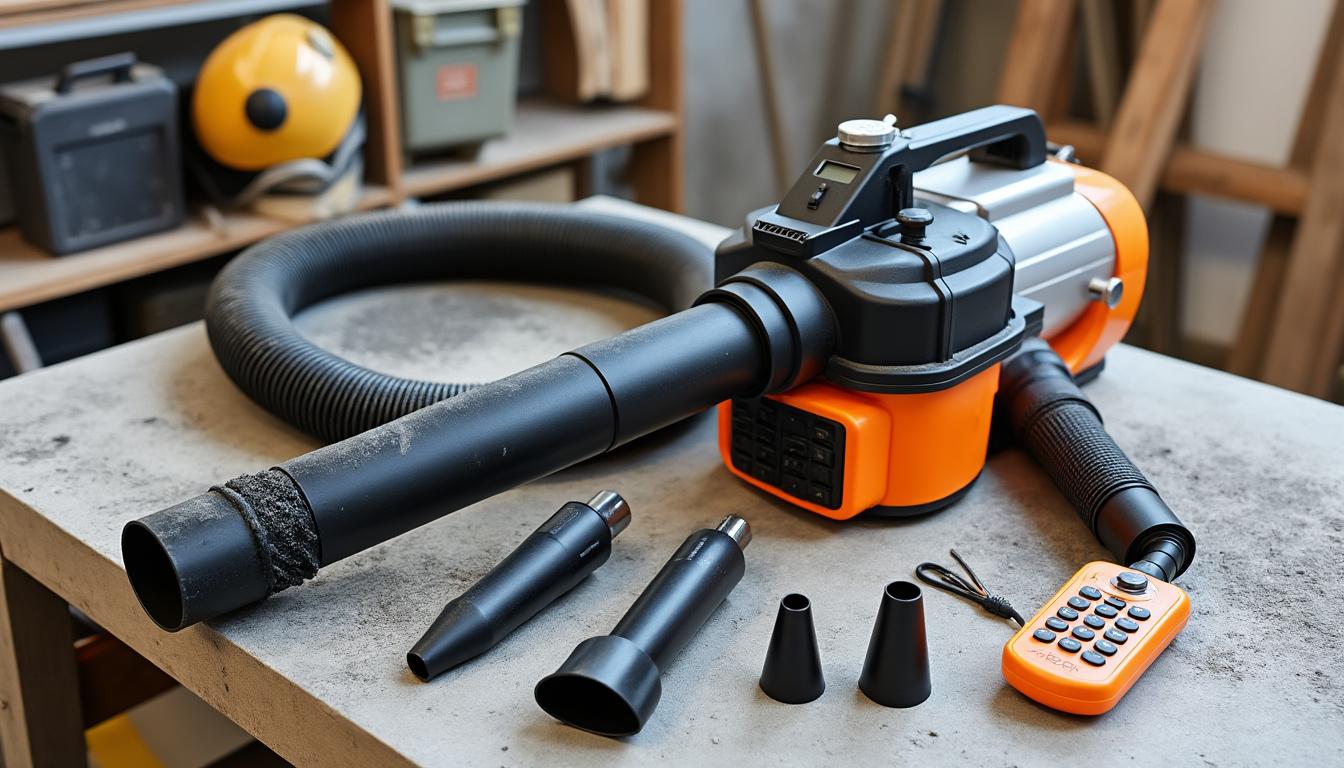
Hoses and Hose Reels play a vital role in material flow management. Mobiles or mounted hose reels simplify setup and teardown, preventing hose damage and tangling. Diameter choice impacts insulation type compatibility: larger hoses optimize loose-fill installation speed by supporting higher volumes, whereas smaller diameters increase velocity for dense-pack applications. Moreover, opting for ribbed hoses can aid in material “fiberization,” enhancing the cellulose’s dispersal quality.
Nozzles and Tubing improve precision in targeted installations. Flexible tubing suits retrofits or complex retrofit wall cavities, while rigid aluminum tubes excel in new construction frame work. Specialized spray nozzles, paired with water pumps, are indispensable for spray-applied cellulose, ensuring mist application uniformity, crucial for adhesion and density.
Remote Control Systems have become increasingly common, allowing insulation installers to control blower output from a distance. These wireless controllers minimize physical back-and-forth between the machine and application zones, reducing crew fatigue and expediting coverage—especially in large residential attics or open framing walls.
Additional equipment such as insulated water tanks for spray systems maintain optimal moisture levels, particularly in colder climate zones where freezing is a concern. Vacuum systems assist with speedy removal of old insulation, helping contractors prep homes quickly and maintain clean installation environments.
Every accessory adds a layer of efficiency and professionalism, making it worthwhile for homeowners and contractors to invest in these practical tools to elevate their insulation installation experience and results.
Maintaining Your Cellulose Insulation Blowing Machine for Longevity and Performance
Proper maintenance preserves blower efficiency and often extends the operational lifespan of these specialized machines. Without routine care, issues such as reduced pressure, inconsistent material feed, and equipment breakdowns are common, negatively impacting insulation quality and project timelines.
One critical maintenance task is replacing worn airlock seals and cleaning agitators. Seals prevent air leaks that can lower blower pressure and cause uneven insulation distribution. Most manufacturers recommend inspecting and replacing seals annually or biannually depending on use frequency. Keeping agitators free from cellulose buildup ensures consistent fluffing action and prevents motor overheating.
Using gradual reducers on hoses instead of sudden changes in hose diameter is also advised to maintain flow velocity and reduce clogging risks, crucial for dense-pack and spray applications.
Insulation installers often monitor installation quality through density testing. This involves calculating installed weight against cavity volume to verify the optimal pounds per cubic foot (pcf) of cellulose, making adjustments as needed for each home assembly.
Regular documentation and adherence to a maintenance schedule safeguard your blower investment, minimize unplanned work interruptions, and promote consistent energy-efficient home insulation installation for years to come.
Selecting the Right Cellulose Insulation Blower for Your Home Improvement Project
Homeowners pursuing improved energy efficiency and thermal comfort often weigh multiple factors before choosing a cellulose insulation blower. The ideal machine should not only match the intended installation method and home size but also fit the homeowner’s expertise and budget.
For those initiating a home insulation upgrade, lightweight, versatile blowers suited for loose-fill attic installations may provide excellent returns by targeting one of the largest areas of heat loss in many homes. Conversely, dense-pack machines better serve remodeling projects requiring thorough insulation of walls or crawl spaces, where material density and tight fit prevent airflow and energy loss.
Where spray-applied cellulose is preferred, investing in a combo blower system with water pumps tends to benefit large-scale renovations or new home constructions demanding uniform application and performance consistency.
Industry leaders like ProSource Insulation and Attics And More provide useful resources and equipment options tailored for various insulation blower needs, helping homeowners and contractors make informed choices aligned with their specific project and home insulation goals.
Ultimately, the best insulation blower will align blower capacity, insulation type compatibility, and power requirements with home improvement objectives, ensuring the lost energy through walls or attics is minimized and that the investment delivers durable, energy-saving benefits.