
Choosing the right DIY spray foam insulation kit is a pivotal step for any homeowner looking to enhance their home’s thermal performance and energy efficiency. With heating and cooling expenses accounting for a significant portion of utility bills—often 25-40% due to air leaks—targeted insulation upgrades can yield substantial savings. Recent advancements in spray foam insulation kits have democratized this technology, enabling homeowners to perform high-quality installation without hiring expensive professionals. However, the landscape of available kits varies widely in materials, application methods, and costs, making informed decisions crucial to avoid costly mistakes.
DIY spray foam insulation kits now come with improved environmentally friendly formulations featuring low global warming potential (GWP), offering both superior performance and longer durability than previous generations. Yet, the selection process is nuanced, requiring an understanding of foam types, coverage calculations, safety precautions, and local building codes. Homeowners must also navigate project scale differences, from simple gap sealing to expansive basement or attic insulation. The right kit balances cost effectiveness, ease of use, and thermal barrier requirements to ensure long-lasting results and energy savings.
As the market matures in 2026, this guide illuminates the essential criteria and practical tips for choosing the optimal DIY spray foam insulation kit. From analyzing closed-cell versus open-cell foams to exploring brand-specific features and safety protocols, this resource empowers homeowners to make confident, cost-effective decisions tailored to their unique home insulation needs.
In brief:
- DIY spray foam insulation kits reduce energy bills by up to 20% by sealing air leaks efficiently.
- Closed-cell foam offers superior R-value and moisture resistance suitable for basements, crawl spaces, and exterior sheathing.
- Open-cell foam excels at sound dampening but is less common in DIY kits due to application complexity.
- Proper foam density and installation technique are critical to achieve promised thermal performance.
- Safety equipment, including respirators and protective gear, is mandatory to avoid harmful chemical exposure.
- Planning for realistic coverage and waste helps prevent running short mid-project.
- Choosing kits with features like temperature indicators and backup spray guns benefits application reliability.
- Compliance with building codes and thermal barrier requirements is essential for both safety and legality.
- Professional installation remains advisable for large or complex projects, but targeted DIY applications offer excellent ROI.
Understanding Foam Types and Foam Density for Optimal DIY Spray Foam Insulation
When selecting a spray foam insulation kit, grasping the fundamental differences between foam types is essential. The two primary variants found in the market are closed-cell and open-cell foam, each providing distinct advantages tailored to different home insulation needs.
Closed-Cell Foam: High R-Value and Moisture Resistance
Closed-cell foam serves as the powerhouse in spray foam materials, providing a high R-value of approximately 5.0 to 7.4 per inch and creating a rigid, impermeable air and moisture barrier. This foam type’s closed-cell structure means each cell is sealed, boosting both insulation density and strength. Weighing between 1.75 and 2.25 pounds per cubic foot, closed-cell foam adds structural reinforcement to walls, ceilings, and foundations.
Due to its moisture resistance and superior sealing capability, closed-cell foam is ideally suited for areas prone to dampness such as basements, crawl spaces, and exterior wall sheathing. For example, sealing a basement rim joist with closed-cell foam can reduce air leaks that typically account for up to 25% of annual heating costs. Its expansion ratio of about 30:1 allows for precise thickness control, helping homeowners avoid application mishaps common in DIY projects.
In addition to energy savings, this foam enhances the structural integrity of the home. For instance, contractors report a 75-100% increase in wall strength after closed-cell foam insulation, a feature particularly valuable in regions impacted by severe weather or seismic activity.
Open-Cell Foam: Acoustic Benefits and Flexible Air Flow
Open-cell foam features a lighter density of about 0.5 pounds per cubic foot, with an R-value range from approximately 3.5 to 3.9 per inch. Unlike closed-cell foam, it allows for some air movement due to its open structure, which improves sound dampening across interior walls and floors. Its high expansion ratio near 100:1 makes it effective at filling large, irregular cavities.
Though highly beneficial in applications where acoustics matter, such as in bedroom walls or between floors, open-cell spray foam presents challenges for DIY users. Its aggressive expansion heightens the risk of overapplication, which can warp framing members if not carefully managed during the application process.
Due to safety and performance considerations, most DIY users in 2026 focus on closed-cell formulations, which tend to deliver more consistent, predictable results. However, for specialized projects such as attic floors over conditioned spaces, open-cell foam remains an attractive option when installed by experienced DIYers or professionals.
Foam Density and Application Consistency Impact on Energy Efficiency
The density and uniformity of the foam application are key to achieving effective insulation and air sealing. Inconsistent foam thickness or density can create thermal bridges—areas where heat escapes or moisture penetrates—undermining insulation efforts.
Closed-cell foam maintains higher density even with minor application flaws, making it more forgiving to beginners. In contrast, open-cell foam’s lower density means thin spots drastically reduce its R-value, as much as a 50% performance loss when applied under 1 inch thickness.
Homeowners aiming for maximum energy efficiency should select kits known for delivering consistent foam density and invest time in learning proper techniques. Kits featuring adjustable spray tips, temperature indicator strips, and clear instruction manuals can significantly improve DIY success rates and reduce installation errors.
For detailed insight on selecting the right kit, the diy spray foam insulation kits guide provides an excellent resource.
Critical Safety Measures and Application Process for Successful DIY Spray Foam Projects
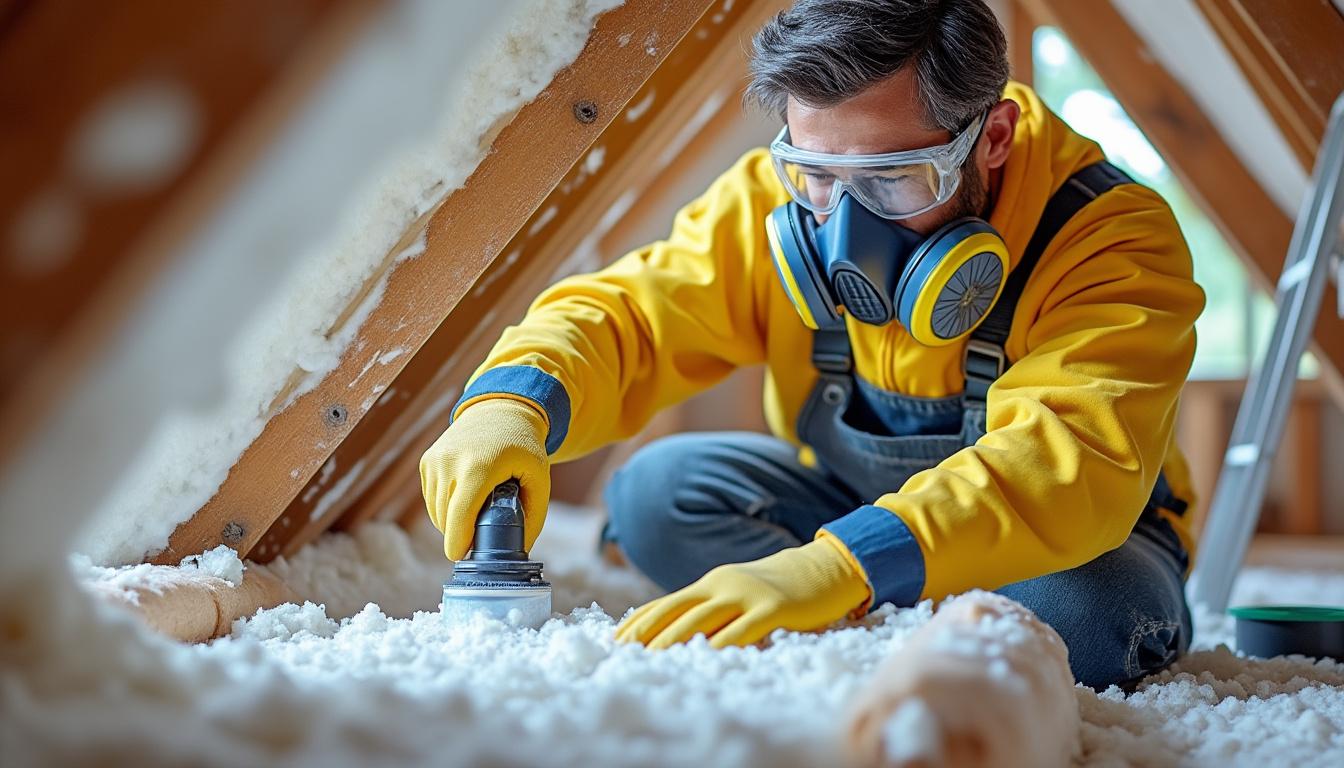
Ensuring safety throughout the spray foam insulation application process is non-negotiable. Spray foam contains isocyanates—chemicals that can cause serious respiratory and skin sensitization, sometimes permanently affecting individuals if proper precautions are ignored.
Essential Personal Protective Equipment (PPE)
Applying spray foam requires comprehensive PPE, including a NIOSH-approved respirator equipped with organic vapor cartridges and P100 filters, chemical-resistant coveralls such as Tyvek suits, nitrile gloves of at least 6 mil thickness, wrap-around safety goggles, and disposable shoe covers. Investing approximately $150-$200 in this equipment safeguards health and prevents chemical exposure, which is critical given the irreversible respiratory risks involved.
Ventilation of the workspace is equally vital. Mechanical ventilation systems that fully exchange air every 5-10 minutes during application help prevent chemical buildup. Natural ventilation alone seldom meets safety requirements, especially in confined spaces like basements and crawl spaces.
Pre-Application Preparations
Proper substrate preparation enhances adhesion and foam performance. Surfaces must be clean, dry (moisture under 20%), and within the ideal temperature range of 60-80°F for substrates and 75-85°F for foam tanks. Using a moisture meter is recommended to verify dryness before application.
Storage of foam tanks indoors for at least 24 hours prior to use stabilizes chemical temperatures. Some advanced DIYers employ indirect heating blankets in cold weather, but direct heat sources such as hair dryers should be strictly avoided to prevent chemical instability.
Step-by-Step Application Best Practices
- Spray Gun Technique: Maintain a 12-18 inch distance, use steady sweeping motions with overlapping passes, and avoid static or prolonged spraying in one spot.
- Layering: Apply foam in lifts of no more than 2 inches to allow even curing and avoid solvent trapping.
- Temperature Monitoring: Check tank temperature strips regularly; temperatures below 70°F degrade foam performance.
- Waiting Time: Allow each application layer to cure tack-free for 15+ minutes before additional passes.
Common application mistakes include rushing layer cure times, ignoring ventilation needs, and misjudging foam thickness. These often lead to adhesion failure, shrinking, or uneven coverage, which compromise long-term insulation efficiency.
Understanding and properly executing the application process is detailed further in the comprehensive articles available on do-it-yourself spray foam insulation.
Comparing Popular DIY Spray Foam Insulation Kits: Features, Coverage, and Cost Effectiveness
DIY spray foam insulation kits vary widely in coverage capacity, price, and additional features. Some kits are designed for small gap filling, while others accommodate large-scale projects like insulating full basements or garages.
| Brand / Model | Coverage (Board Feet) | R-Value per Inch | Price Range | Unique Features |
|---|---|---|---|---|
| Tiger Foam TF-200FR | 200 | 7.0 | $365 | ASTM E-84 fire rating, professional-grade hoses, temperature indicators |
| DuPont Froth-Pak 200 Low GWP | 200 | 6.9 | $419 | Dual-nozzle system reducing overspray by 30%, low environmental impact |
| Touch ‘n Seal U2-200 | 200 | 6.6 | $365 | Fire retardant formula meeting codes, rapid cure time |
| Great Stuff Big Gap Filler (Aerosol) | — | 5.0 | $7–$10 per can | Easy single-component application, reusable cans |
When selecting a kit, consider your project scope carefully. Small projects such as basement rim joist sealing or attic bypass filling typically require kits around 200 board feet, balancing material availability with manageable application complexity. Larger projects exceeding 600 board feet may benefit more from professional installations or semi-professional systems to ensure uniform coverage and code compliance.
Cost effectiveness depends on both the upfront kit price and expected energy savings. On average, targeted DIY projects can cut heating and cooling costs by up to 20%, often paying for the insulation upgrade within 3-4 years. The availability of fire-retardant formulas also reduces the need for costly thermal barrier installation in some cases, further lowering overall expenses.
Explore additional detailed reviews and buying advice at best DIY spray foam insulation kit reviews to match a kit perfectly to your home insulation project.
Planning and Managing Your DIY Home Insulation Project for Maximum Energy Savings
Successful DIY spray foam insulation projects hinge on thorough planning and realistic expectations about coverage, waste, and project complexity. Homeowners should approach projects methodically to optimize outcomes.
Project Size and Coverage Calculations
The standard measurement for spray foam is board feet, where one board foot equals a 12-inch by 12-inch area covered to a thickness of one inch. Understanding this metric helps plan material needs:
- 100 sq. ft. at 1 inch thickness = 100 board feet
- 50 sq. ft. at 2 inches thickness = 100 board feet
- 25 sq. ft. at 4 inches thickness = 100 board feet
Typical residential installations require 1 to 3 inches of closed-cell foam depending on the application. For instance, basement rim joists usually need 2-3 inches thickness for effective air sealing and moisture resistance. Planning for approximately 75% of manufacturer coverage claims accommodates typical waste due to overspray, nozzle changes, and application error.
Waste and Efficiency Estimates by Application Type
| Application Type | Expected Waste Factor | Recommended Overpurchase |
|---|---|---|
| Small Gaps and Cracks | 15-20% | Order at least 15% extra |
| Rim Joist Insulation | 20-25% | Order at least 25% extra |
| Cavity Filling | 25-30% | Order at least 30% extra |
| Overhead/Attic Applications | 30-35% | Order at least 35% extra |
Balancing Cost and Energy Efficiency Gains
DIY spray foam kits typically range from $200 for small repair-focused projects to over $1,200 for expansive home coverage. Adding the cost of safety gear and tools increases total expenses but often still results in 40-60% cost savings compared to professional installation for small to medium projects.
For larger projects exceeding 600 board feet, professional installation offers advantages such as warranty protection, superior application consistency, and code compliance, which can translate into better long-term value.
To maximize energy efficiency returns, prioritize sealing high-leakage areas such as rim joists, attic bypasses, and penetrations first, where research shows energy savings can reach up to 25%. These targeted strategies improve comfort and reduce costs quickly, sometimes paying back investment in under four years.
Further detailed guidance on planning and budgeting your project is available at how to choose the best DIY foam insulation spray for your home.