
Choosing the proper insulator for your dipole antenna is a critical step that directly impacts radio frequency efficiency and overall antenna performance. With various materials and designs available, understanding how each affects signal loss, weather resistance, and mechanical strength is essential for both amateur radio enthusiasts and professional installers. This guide provides practical insights into the selection and installation of insulators for dipole antennas, combining technical expertise with real-world application tips to optimize your antenna system.
Key Points to Consider When Selecting Dipole Antenna Insulators:
- Material durability against environmental conditions
- Minimizing signal loss through proper insulation
- Ensuring mechanical strength for long-term stability
- Compatibility with antenna wire gauge and installation type
- Ease of installation and adjustability
Understanding the Role of an Insulator in Dipole Antenna Systems
The primary role of an insulator in a dipole antenna is to prevent electrical current from leaking to the antenna support structures or ground, which would otherwise degrade the radiation efficiency and distort the antenna’s resonance. For those invested in amateur radio or commercial installations, recognizing how insulator placement and material selection affect the antenna’s radio frequency performance is fundamental.
In the dipole configuration, insulators are typically installed at the center feed point as well as the far ends of the antenna wires. This separation keeps the dipole arms electrically isolated without compromising mechanical attachment points. For example, the center insulator must accommodate substantial mechanical tension from wire tension, which demands materials with high mechanical strength like reinforced plastics or ceramics. Meanwhile, end insulators primarily focus on weather resistance and low signal attenuation.
Choosing poor-quality insulators can lead to increased signal loss, corrosion problems, and physical degradation, negatively impacting the antenna’s tuning and longevity. Materials such as PTFE (Teflon) are often regarded as the gold standard due to their exceptional electrical insulation properties and endurance against weather elements. Alternatively, nylon or ultraviolet-resistant plastics can be suitable budget-friendly options but might require more frequent replacement.
Additionally, understanding the effect of installation techniques is equally important. For instance, unused wire should be stripped approximately 8 inches at the antenna ends, with 4 inches threaded through the insulator and twisted to achieve a secure connection that minimizes resistance. Proper soldering of these twisted wires before final installation ensures optimal conductivity and stable antenna performance.

Material Selection and Weather Resistance for Long-Term Durability
When selecting an insulator for a dipole antenna, a critical consideration is the material’s resilience to environmental exposure. Outdoor antennas routinely face sun, rain, snow, wind, and temperature fluctuations that challenge the integrity of less durable materials.
Materials such as PTFE, polyethylene, and high-grade polypropylene offer exceptional resistance to ultraviolet radiation and moisture ingress. PTFE, specifically, excels with a low dielectric constant, minimizing radio frequency signal distortion and maintaining consistent antenna characteristics through years of weathering.
For hobbyists and professionals alike, the choice between rigid ceramic insulators and flexible polymer options depends on mechanical demands and ease of installation. Ceramic insulators are hard and highly resistant to heat and abrasion but can be brittle under mechanical stress. Polymers provide better shock absorption and flexibility but might degrade faster under protracted UV exposure unless treated with special additives.
Innovations in polymer compound blends have improved resistance to cracking and fading, making modern antenna insulators reliable for multi-year outdoor deployments. Furthermore, some manufacturers offer insulators with integrated UV inhibitors and hydrophobic coatings to shed water and reduce ice accumulation—a common challenge in northern climates.
Mechanical robustness also includes the ability to handle antenna tension forces without deforming or snapping. Insulators used at the dipole ends must secure both the antenna wire and the attachment rope or cable, making integrated attachment holes or clamps valuable for ease of setup and maintenance. Many commercial insulators, like those found in the DX Engineering end insulator kit, showcase serpentine wire routing grooves designed to improve mechanical retention while reducing potential abrasion points on the wire.
List of Common Insulator Materials with Properties
| Material | Weather Resistance | Dielectric Properties | Mechanical Strength | Typical Use |
|---|---|---|---|---|
| PTFE (Teflon) | Excellent UV & moisture resistance | Low dielectric loss | Good tensile strength | High-end center and end insulators |
| Ceramic | Outstanding heat and abrasion resistance | Very low dielectric loss | Brittle, high compressive strength | Heavy-duty mechanical points |
| Polyethylene/Polypropylene | Good UV resistance, improved with additives | Moderate dielectric loss | Flexible, good impact resistance | Cost-effective end insulators |
| Nylon (UV-stabilized) | Fair weather resistance; degrades over years | Moderate dielectric loss | Flexible and durable | Lightweight applications, temporary setups |
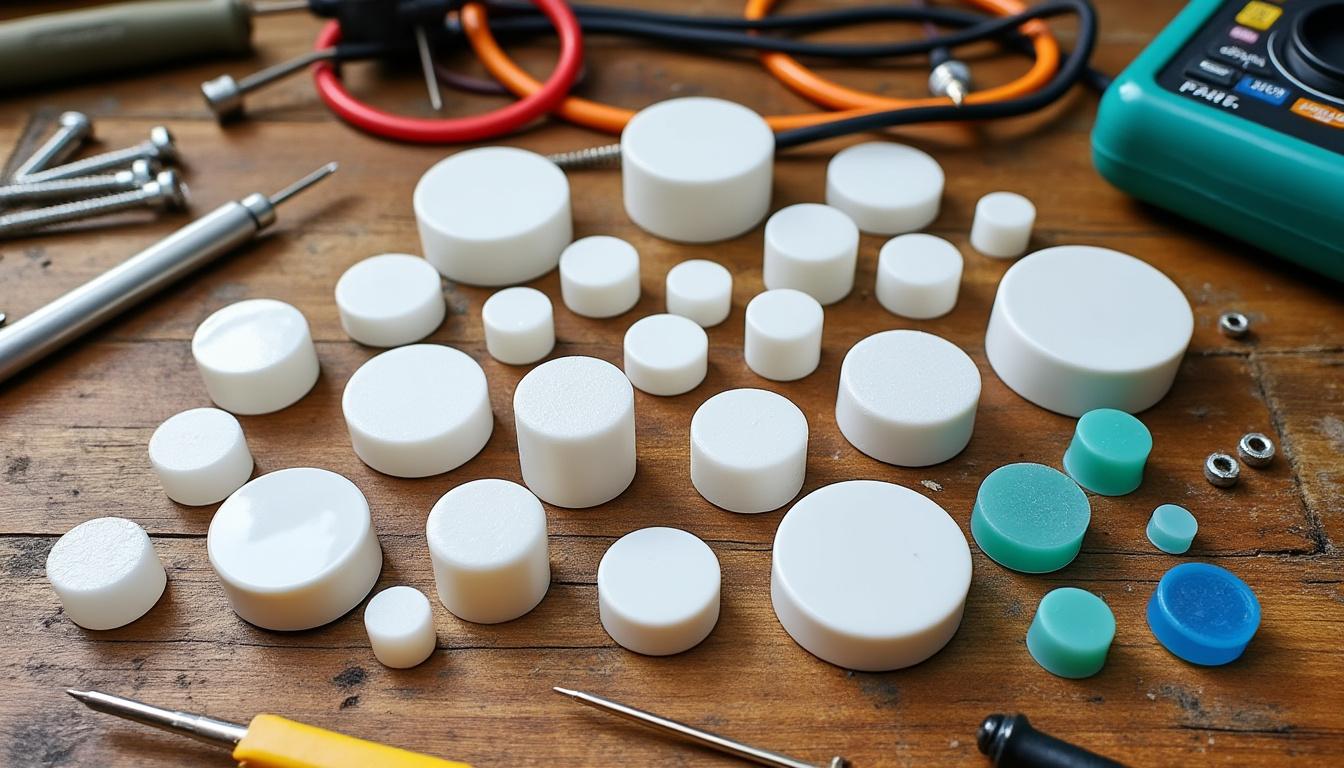
Step-by-Step Installation Tips for Dipole Antenna Insulators
The installation process of the insulator on a dipole antenna is as vital as selecting the right material. Correct installation ensures the antenna maintains its tuned resonance, providing optimal radio frequency transmission and reception. Here is a detailed procedure commonly used in the field and documented in resources like IW5EDI’s technical articles on antenna insulators:
- Strip the antenna wire: Remove about 8 inches of insulation at the wire ends.
- Thread through the insulator: Insert 4 inches of the bare wire through the insulator’s opening.
- Twist the wire strands: Carefully twist the protruding wire to secure a solid mechanical and electrical connection.
- Measure the Standing Wave Ratio (SWR): Attach the antenna to your transceiver or SWR meter and assess the antenna’s efficiency. A low SWR indicates minimal power loss.
- Adjust wire length if needed: If the SWR is too high, pull additional wire through the insulator, twist again, and re-measure until an acceptable SWR is achieved.
- Solder the twisted wires: Before finalizing the installation, solder the twisted wire to ensure a long-lasting and reliable connection.
- Attach the rope: Utilize the additional hole on the insulator for securing the hanging rope or wire.
- Secure and trim excess wire: After soldering and securing, carefully trim excess wire to prevent damage or unnecessary weight.
This method reduces signal loss and ensures mechanical stability, preventing antenna detuning caused by wire slippage or corrosion over time.
Common Mistakes to Avoid During Installation
- Failing to strip sufficient insulation from wire ends, preventing adequate contact.
- Skipping the soldering step, leading to loose connections prone to corrosion.
- Neglecting to test and adjust SWR before finalizing attachments.
- Using insulators without proper UV or weather protection in outdoor setups.
- Not securing the rope properly, resulting in antenna sagging and mechanical failure.
Impact of Insulator Choice on Antenna Performance and Signal Quality
The insulator’s influence extends beyond mechanical considerations into the realm of electromagnetic efficiency. An improperly selected or installed insulator can introduce unwanted capacitance or inductance, causing signal attenuation or pattern distortion.
For instance, certain plastics may absorb moisture, subtly altering their dielectric properties over time. This absorption can cause minor detuning effects, especially in sensitive high-frequency applications. In contrast, high-performance materials like PTFE maintain stable dielectric constants, ensuring the antenna’s designed resonant frequency remains consistent.
Additionally, the physical design of the insulator affects wire spacing and configuration, impacting the antenna’s impedance and bandwidth. Insulators that allow a serpentine wiring pattern, like those recommended by DX Engineering, facilitate fine tuning adjustments on-site without dismantling the antenna setup.
Typical issues like corona discharge can occur if insulators have sharp edges or are cracked, leading to increased radio frequency noise and deteriorated transmission quality. A smooth finish on insulator surfaces reduces these risks and extends operational life.
For enhanced results, consider full system integration: matching feed lines, mast materials, and insulator selection to maintain optimal antenna attachment points and minimize interference. Several comprehensive guides, such as those on ham radio antenna construction, provide valuable insight into how incremental improvements affect overall system performance.
Innovations and Trends in Dipole Antenna Insulator Technology
As the amateur radio community grows and demands higher performance antennas, manufacturers have innovated new insulator designs that emphasize modularity, ease of installation, and enhanced durability. The evolution from simple molded plastic parts to precision-engineered components with multi-functional roles marks the future of dipole antenna construction.
For instance, some modern insulators integrate tension adjustment mechanisms enabling rapid length tuning directly at the antenna ends, improving signal optimization without climbing poles or dismantling setups. This concept is particularly useful during field operations or temporary deployments.
Moreover, environmental concerns have led to the development of eco-friendly materials that minimize environmental impact without compromising performance. These composites maintain high strength and weather resistance while reducing carbon footprint during production.
Commercially available kits often package these advanced insulators with pre-measured wire lengths and standardized connectors, streamlining the installation process for beginners and professionals. Such kits are discussed in depth within resources like ARRL dipole antenna construction guides, which underline the importance of material selection combined with correct assembly to maximize longevity and performance.
Looking ahead, the integration of smart sensors embedded in insulator housings to monitor mechanical stress and environmental exposure may offer remote condition feedback, facilitating proactive maintenance and extending antenna service life.