
In the ever-evolving landscape of residential and commercial construction, the quest for increased energy efficiency has brought insulation technology to the forefront. Among the various insulation options available, R49 insulation stands out due to its high thermal resistance and proven benefits in improving a building’s energy performance. With rising energy costs and tightening building regulations in 2026, understanding the unique attributes of R49 insulation becomes imperative for homeowners, contractors, and property investors seeking both comfort and cost savings. Homeowners living in climates with significant seasonal temperature swings, particularly in northern U.S. states, find R49 insulation to be a crucial factor in minimizing energy consumption while maintaining consistent indoor temperatures.
R49 insulation’s ability to significantly slow down heat transfer is essential for reducing heat loss in winter and heat gain during summer. This performance characteristic directly impacts heating and cooling requirements, translating into lower utility bills and improved HVAC system longevity. As environmental concerns grow and green building certifications become more prevalent, investing in effective insulation like R49 is not just practical—it’s increasingly necessary. The real-world impact of this insulation rating extends beyond immediate comfort, offering a key pathway to sustainable, energy-efficient building solutions.
To navigate the nuances of insulation ratings, thickness requirements, installation methods, and cost considerations, one must first appreciate the science behind R-values and how they influence home insulation decisions. The following detailed sections unpack the specifics of R49 insulation—from technical fundamentals and material options to climate suitability and long-term financial benefits—offering a comprehensive guide to optimizing energy efficiency through insulation.
Key points at a glance:
- R49 insulation offers high thermal resistance, ideal for cold to temperate climates in the U.S.
- Selecting the correct insulation thickness and installation method ensures maximum energy savings and comfort.
- Cost-effectiveness of R49 insulation improves with available federal tax credits and utility rebates.
- Comparison with R60 insulation highlights trade-offs between upfront investment and incremental energy savings.
- Proper attic ventilation and air sealing are essential complements to achieve expected performance levels.
Exploring the Fundamentals of R49 Insulation and Its Impact on Energy Efficiency
The concept of R-value, fundamental to understanding insulation like R49, quantifies a material’s ability to resist heat flow. Simply put, the higher the R-value, the better the thermal resistance. R49 represents a significant enhancement over mid-range values such as R30 or R38, making it an attractive choice for regions aiming for substantial energy savings and reduced dependence on heating and cooling systems.
Thermal resistance is critical in controlling the rate at which heat enters or escapes a home. During cold winters, a home equipped with R49 insulation reduces heat loss through the attic and walls, maintaining a warmer interior. In the heat of summer, it acts as a shield against external temperatures, reducing reliance on air conditioning and thus lowering electricity bills. The U.S. Department of Energy endorses insulation levels roughly equivalent to R49 for most climate zones classified as 4 through 7, accounting for the majority of the northern states.
To illustrate, a homeowner in Minneapolis replaces aging R19 insulation in their attic with R49 blown-in fiberglass. After the upgrade, they observe a 25% reduction in heating costs due to the decreased heat loss. This translates to substantial annual energy savings and improved indoor comfort—highlighting the direct correlation between insulation quality and utility expenses.
In addition to impacting energy consumption, home insulation with high R-values contributes to soundproofing and moisture control. For residential buildings, this adds to occupant comfort, particularly in multi-family housing or homes situated near busy roadways. The enhanced thermal performance of R49 insulation thus supports a holistic approach to building comfort and efficiency.
For more in-depth understanding of where R49 insulation fits within building practices, consult resources like expert explanations on R49 insulation applications and its noted advantages in various climates.
Thickness, Installation Techniques, and Material Choices for R49 Insulation
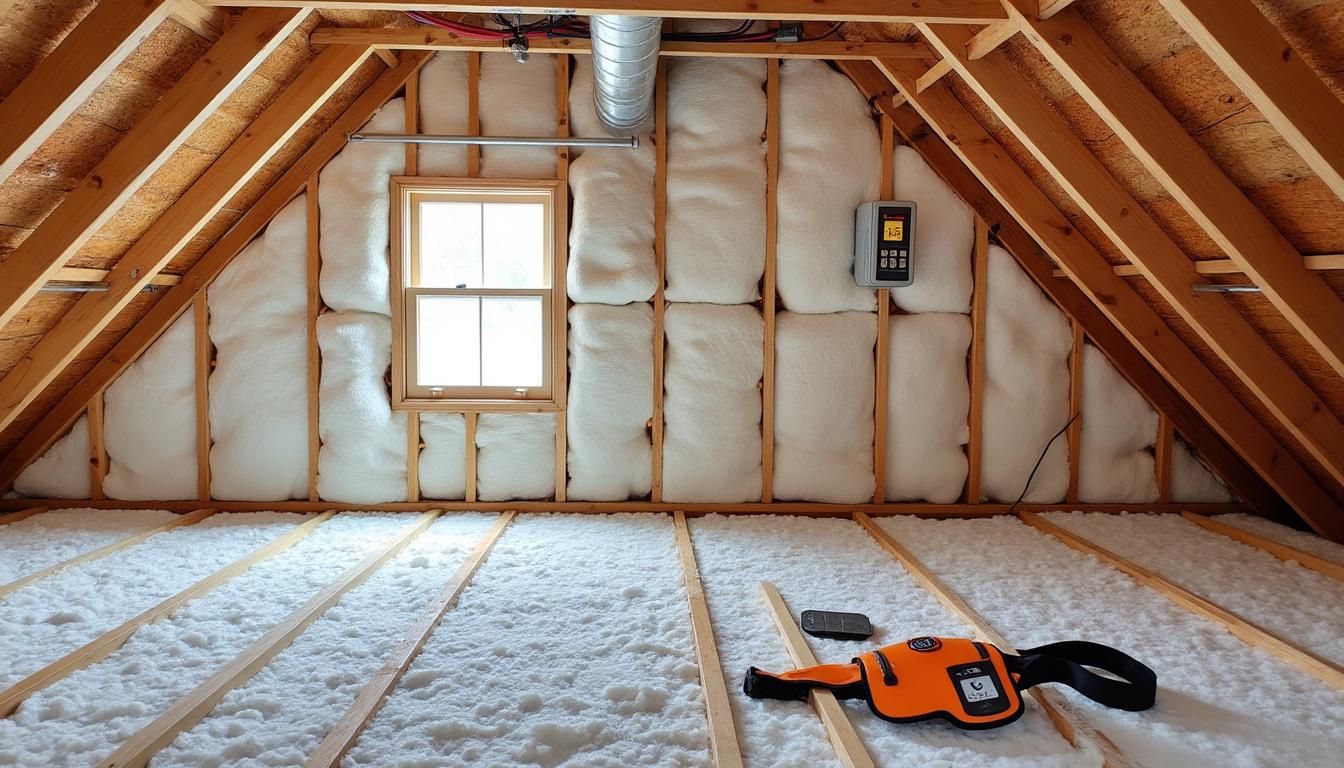
Achieving R49 insulation requires attention to both material type and thickness. Typical blown-in fiberglass insulation demands approximately 14 to 16 inches of depth to reach the R49 rating. Cellulose insulation requires a similar thickness, while layered fiberglass batts stacked strategically can also achieve this value depending on density and installation quality.
Installation technique plays a pivotal role in ensuring heat loss reduction and insulation durability. For blown-in insulation, contractors use specialized equipment to distribute the material evenly across the attic floor or within wall cavities. Consistency is key; uneven application or compressed insulation reduces the effective R-value and undermines energy savings.
In batt insulation setups, combining different R-values can help achieve the R49 target. For instance, installing R30 batts alongside R19 batts perpendicular to each other in ceiling joist cavities is a common method. However, installers must avoid compressing batts, as compressed insulation loses thermal resistance by reducing trapped air pockets which are essential for blocking heat transfer.
Another modern option for achieving high R-values in constrained spaces is spray foam insulation, delivering around R6 to R7 per inch. While it reduces the required thickness for R49 compliance to roughly 7 to 8 inches, spray foam comes at a significantly higher upfront cost. Yet, its superior air-sealing properties may justify the expense in high-performance builds or retrofits with limited attic space.
Effective attic ventilation supports the longevity and functionality of R49 insulation. Soffit vents and ridge vents must remain unobstructed to promote airflow, preventing moisture accumulation that can compromise insulation materials. Often, baffles or rafter vents are installed to route airflow appropriately without blocking insulation. Improper ventilation can lead to mold growth and structural damage, defeating the purpose of enhanced insulation.
Below is a comparative table outlining common materials used for R49 insulation and their characteristics:
| Insulation Material | Required Thickness for R49 | Typical Cost Range (per sq. ft.) | Installation Notes | Additional Benefits |
|---|---|---|---|---|
| Blown-in Fiberglass | 14-16 inches | $1.00 – $1.50 | Uniform application required | Fire resistant, recyclable content |
| Blown-in Cellulose | 13-14 inches | $0.90 – $1.30 | May settle over time | Insect deterrent, fire retardant |
| Fiberglass Batts (Layered) | Multiple layers totaling ~15 inches | $0.80 – $1.20 | Labor intensive to avoid compression | Lower upfront cost |
| Spray Foam | 7-8 inches | $3.00 – $5.00 | High initial cost, superior sealing | Air sealing, moisture barrier |
For additional insights and practical advice on installation methods and associated costs, review detailed discussions on R49 insulation applications and installation.
R49 Versus R60 Attic Insulation: Deciding the Right Fit for Maximum Energy Savings
Among homeowners and contractors, weighing the benefits of R49 insulation against the higher R60 rating remains a topic of considerable interest. Both provide strong thermal performance, but the choice hinges on factors like climate zone, budget, and specific building characteristics.
R60 usually requires about 17 to 22 inches of insulation material, which means greater depth and potentially more labor and material costs during installation. In comparison, R49 needs less space and is more compatible with standard attic dimensions. While R60 does improve heat loss reduction by approximately 5 to 10 percent beyond R49, this additional gain comes with diminishing returns relative to the investment.
The U.S. Department of Energy recommends R60 insulation primarily in Zone 8, the coldest climate zone covering parts of Alaska and extreme northern regions. In zones 4 to 7, where colder months and moderate snowfall are common, R49 typically meets or exceeds energy efficiency standards. However, property owners seeking premium energy savings or constructing net-zero homes may opt for R60 despite the higher costs.
Homeowners with cathedral ceilings or converted attic living spaces often prefer R60 for enhanced comfort during extreme weather. For example, a homeowner in rural Maine installing R60 insulation in a vaulted ceiling space noticed an additional 7% reduction in heating bills compared to R49, proving the value of the premium option in some contexts.
The table below compares R49 to R60 insulation with regard to key considerations:
| Feature | R49 Insulation | R60 Insulation |
|---|---|---|
| Thermal Resistance | 49 | 60 |
| Required Thickness | 14-16 inches | 17-22 inches |
| Installation Complexity | Moderate | Higher due to depth |
| Energy Savings Potential | Substantial | Incrementally higher |
| Cost | Lower upfront investment | 10-15% more expensive |
| Ideal Climate Zones | Zones 4-7 | Zone 8, specialized uses |
For those evaluating this dilemma, referencing comprehensive reviews on R49 versus R60 attic insulation choices can provide critical insights.
Regional Climate Zone Recommendations and Building Code Compliance
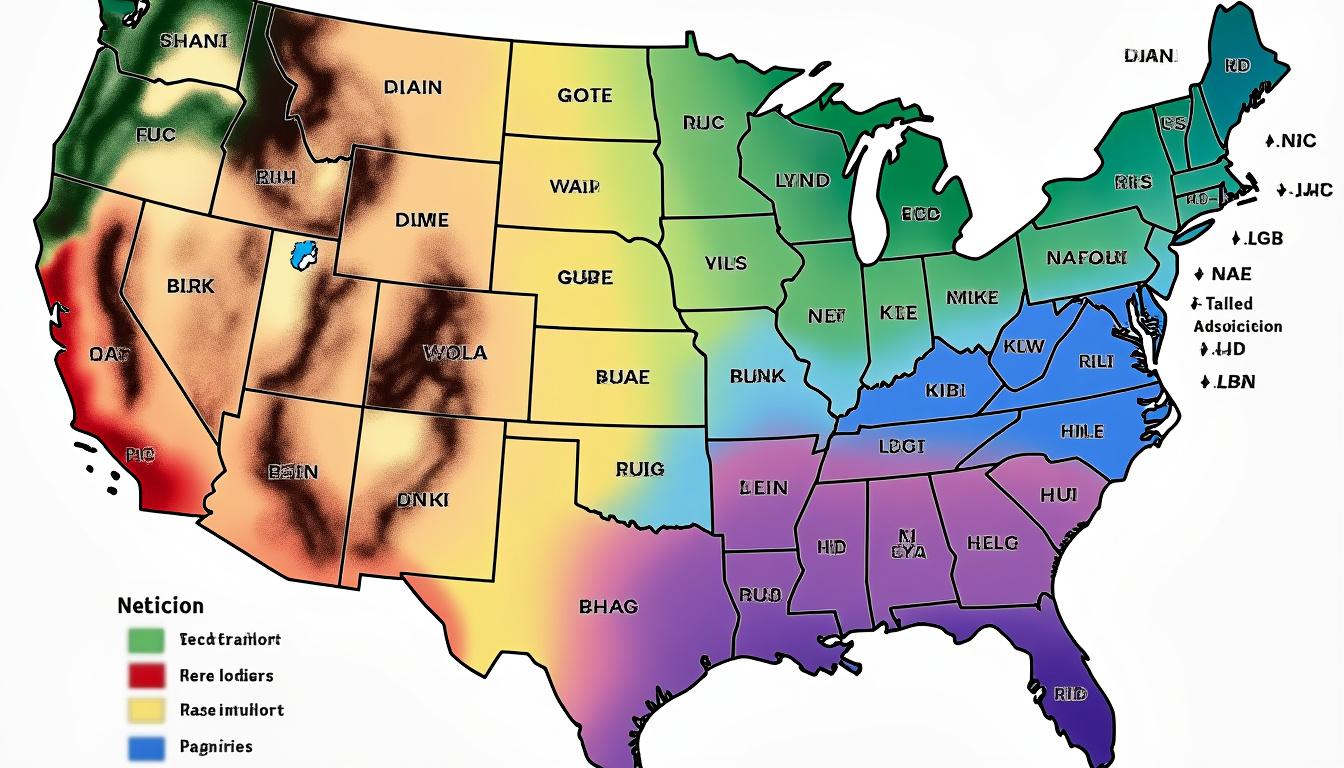
The United States is divided into eight climate zones with specific insulation guidelines to optimize thermal performance and energy efficiency. R49 insulation plays a critical role in zones 4 through 7, where winters are cold but not as extreme as in zone 8. In these areas, achieving R49 helps homes comply with the 2021 International Energy Conservation Code (IECC) standards and local building codes.
For example, cities like Denver, Minneapolis, and Boston fall within zone 6 or 7, where R49 is frequently the baseline recommendation for attic insulation. This is largely because R49 balances energy savings, installation practicality, and cost-effectiveness in these environments. Conversely, in southern zones 1 through 3, lower R-value insulation—typically R30 or R38—is sufficient.
It’s important to note that for basements or crawl spaces, insulation requirements differ and often use materials with R-values ranging from R5 to R19, depending on zone and wall type. Applying the correct insulation levels in these spaces supports overall energy performance and complements high-R-value attic insulation.
Adhering to these prescribed R-value levels not only meets legal codes but also maximizes homeowner comfort and reduces environmental impact by lowering heating and cooling demands. Builders integrating R49 insulation into new construction in these zones contribute to a reduction in carbon footprint and improved building certifications such as ENERGY STAR and LEED.
For detailed guidance on climate zones and recommended insulation levels, visit Energy.gov’s page on energy-saving insulation strategies.
Financial Considerations and Long-Term Benefits of R49 Insulation
When evaluating insulation upgrades, cost and return on investment frequently top the homeowner’s checklist. R49 insulation, while sometimes more expensive upfront than lower R-values, offers impressive long-term energy savings that can offset initial expenditures. In cold climates, upgrading an attic from R30 to R49 insulation can yield annual utility bill savings in the range of $300 to $500 depending on home size and local energy costs.
Adding to the financial appeal, the Inflation Reduction Act and numerous utility providers extend incentives and rebates for insulation projects exceeding minimum code requirements. These financial supports reduce the net cost and accelerate payback periods for investments in energy-efficient home insulation.
The combination of reduced heating and cooling needs also lowers carbon emissions associated with fossil fuel consumption for combustion-based HVAC systems, making R49 installations attractive in the context of environmental responsibility.
Besides energy cost reductions, homeowners should also consider the enhancement in home comfort and property value. Increased insulation with high R-values minimizes cold spots and reduces drafts, creating a consistently comfortable indoor environment year-round. From a resale perspective, energy-efficient upgrades like R49 insulation add tangible value and appeal to eco-conscious buyers.
- Significant energy bill reductions often recovering insulation costs within 5 to 10 years
- Improved indoor air quality due to stabilizing temperatures and reducing moisture intrusion
- Enhanced durability of HVAC equipment from reduced operational strain
- Access to tax credits and rebates to lower upfront installation expenses
- Increased home resale value credited for superior energy efficiency
Homeowners considering insulation improvements can also benefit from professional energy assessments to identify opportunities for air sealing alongside insulation upgrades. A well-sealed attic combined with R49 insulation maximizes thermal performance and extends HVAC equipment life.
For a deeper dive into cost comparisons and performance benefits of R49, consulting resources like the detailed analysis on R38 vs R49 insulation offers valuable insights.