
In various residential and commercial settings, controlling unwanted noise has become a priority for enhancing indoor comfort and productivity. Fibreglass acoustic insulation emerges as a versatile and cost-efficient solution to mitigate noise pollution, offering significant advantages beyond traditional insulation materials. This specialized fibreglass material absorbs and reduces airborne sound transmission through walls, ceilings, and floors, creating quieter, more focused, and energy-efficient indoor environments. As urban density increases and open-plan offices become more prevalent, understanding how fibreglass acoustic insulation operates to improve soundproofing can guide decision-makers in selecting the best building materials for noise reduction without compromising thermal insulation or energy efficiency.
Fibreglass acoustic insulation combines physical characteristics that allow it to trap sound waves effectively while also providing essential thermal benefits, contributing to energy savings in both new constructions and retrofit projects. The demand for such multi-functional insulation solutions is rising in the U.S. market in 2026 due to stricter building codes emphasizing sound control and environmental sustainability. Homeowners, contractors, and investors benefit from insights into the material’s sound absorption performance, installation methods, and long-term durability, making fibreglass acoustic insulation a smart choice for soundproofing strategies.
In this article, we explore the practical advantages of fibreglass acoustic insulation, debunk common misconceptions about its soundproofing capacity, and highlight its role in enhancing indoor acoustics while supporting energy efficiency goals. Detailed comparisons with other materials and installation tips aim to empower readers with actionable knowledge for optimizing noise control in a variety of building applications.
Key takeaways include:
- Fibreglass insulation effectively reduces airborne noise by absorbing sound waves through its dense fiber matrix.
- Different types of fibreglass insulation, such as high-density batts and loose-fill, offer varied acoustic performance suited for walls, ceilings, and attics.
- Its dual function as thermal insulation enhances energy efficiency while improving indoor sound quality.
- Proper installation, including sealing gaps and using layering techniques, maximizes soundproofing benefits.
- Though excellent for airborne sound, fibreglass insulation requires complementary solutions to address impact noise and structure-borne vibration.
The science behind fibreglass acoustic insulation and noise reduction
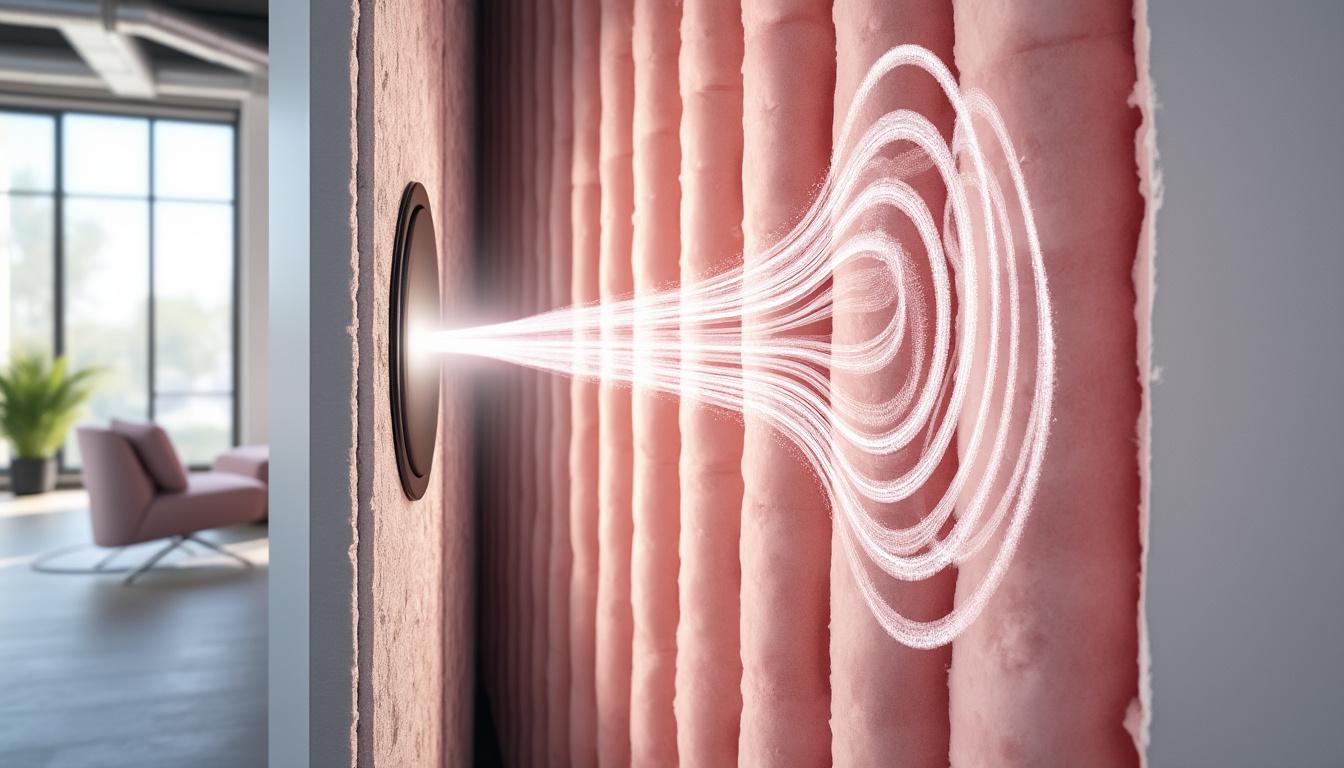
Fibreglass acoustic insulation is engineered to improve indoor acoustics primarily by absorbing sound waves rather than blocking them outright. This distinction is critical: while some materials reflect sound, fibreglass converts sound energy into negligible heat, reducing echo and muffling noise transmission through building envelopes. Its construction involves fine glass fibers densely packed to capture airborne sound waves traveling through cavities in walls, ceilings, and floors.
When sound waves strike fibreglass insulation, the fibers disrupt and scatter the waves, causing their energy to dissipate. This process is called sound absorption and plays a significant role in creating quieter indoor spaces. The trapped air pockets between fibers work as natural sound dampers, reducing reverberation and minimizing noise transfer between rooms. This principle explains why fibreglass insulation contributes both to noise reduction and improving indoor comfort.
Several material properties influence how well fibreglass insulation absorbs sound, including thickness, density, and fiber orientation. Higher density products offer enhanced noise dampening by increasing the mass that sound waves encounter, thus reducing their transmission. For instance, high-density fibreglass batts specifically designed for acoustic applications have densities ranging from 24 to 32 kg/m³, compared to standard batts typically between 10 and 16 kg/m³. This increased density provides better blockage of mid to high-frequency noise, such as conversation and office sounds.
A useful breakdown of fibreglass sound insulation features and their effects on noise control is illustrated in the table below:
| Feature | Effect on Sound | How it Works |
|---|---|---|
| Air Trapping | Absorbs airborne noise | Reduces energy of sound waves by containing air pockets |
| Fiber Matrix | Scatters and diffuses sound waves | Prevents a direct path for sound to travel through walls |
| Density (kg/m³) | Higher density improves sound blocking | More mass obstructs sound wave transmission |
This table underscores how fibreglass’s combination of trapped air and dense fibers works synergistically to achieve effective sound absorption. Its balanced design makes it ideal for applications requiring both noise reduction and thermal insulation, contributing to increased energy efficiency in modern buildings. However, it is important to note its primary soundproofing strength lies with airborne noises like voices and music, rather than impact or structural vibrations.
Types of fibreglass insulation suited for acoustic performance in buildings
Not all fibreglass insulation products are created equal when it comes to soundproofing. Differences in thickness, density, and form factor give each variant unique abilities to meet various noise control challenges in residential and commercial construction.
Understanding these types enables builders and homeowners to choose the most effective material for specific acoustic insulation needs. Below is an overview of common fibreglass insulation types and their suitability for soundproofing tasks:
| Type | Typical Thickness (mm) | Density (kg/m³) | Recommended Application |
|---|---|---|---|
| Standard Fibreglass Batts | 50–100 | 10–16 | Interior wall cavities for moderate sound control |
| High-Density Batts | 70–120 | 24–32 | Party walls, ceilings, and areas requiring enhanced acoustic isolation |
| Loose-Fill Fibreglass | Variable | 8–12 | Attic insulation and irregular cavities where filling gaps is important |
High-density batts provide the most effective sound absorption by virtue of their dense fiber matrix. They are commonly used in commercial office walls and party walls separating shared spaces where noise reduction is crucial. Loose-fill variants serve to reduce airborne noise in attic spaces by filling voids without compression, but their lower density makes them less suitable for significant soundproofing demands.
Prudent selection aligned with the project’s acoustic goals can elevate the effectiveness of fibreglass insulation significantly. Ensuring tight installation with no air gaps is equally vital, as even minor voids allow sound waves to bypass the insulation, undermining acoustic integrity.
For more details on various soundproof insulation materials, consider resources like this comprehensive guide to fibreglass sound insulation.
Maximizing soundproofing: installation techniques and complementary methods
Proper installation transcends merely placing fibreglass insulation between studs; it is a decisive factor for achieving optimal soundproofing performance. Inadequate or compressive installation reduces the material’s sound absorption efficiency and creates noise leak pathways.
A professional insulation contractor often recommends the following steps to maximize soundproofing results with fibreglass:
- Full cavity fill: Fibreglass batts should fill wall cavities completely without compression. Compressed insulation loses porosity and sound absorption capacity.
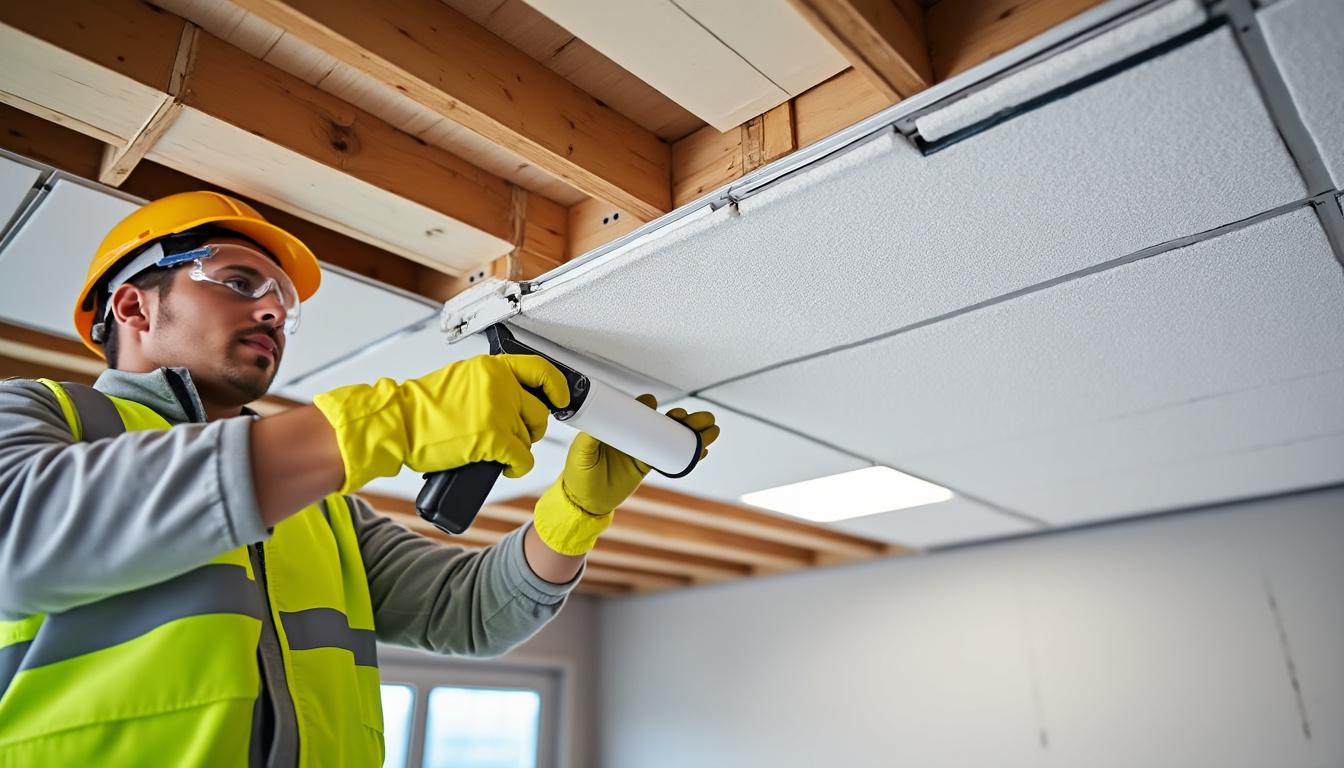
- Sealing gaps: Acoustic caulk or sealant applied around edges, electrical outlets, and penetrations is crucial to stop sound leaks, as fiberglass alone cannot block air pathways.
- Layering approaches: Combining fibreglass insulation with additional mass-loaded vinyl or double drywall layers significantly reduces both airborne and structure-borne noise.
- Decoupling techniques such as resilient channels help break the path of sound vibrations through framing members.
- Complementary materials: Mineral wool insulation may be used in tandem for its superior density and damping properties, especially where bass noise control is critical.
These methods, combined with fibreglass insulation’s natural sound absorbing properties, can create quiet zones even in noisy urban or industrial environments. Many projects find that the integration of sealing and layering delivers the most measurable improvement in noise reduction, boosting occupant comfort and privacy.
In addition to acoustic benefits, maintaining energy efficiency remains a priority. Fibreglass insulation’s thermal properties aid in reducing heating and cooling costs, making it a sustainable solution for soundproof buildings. The dual benefit supports compliance with evolving U.S. building codes that increasingly value both acoustic performance and environmental considerations.
Practical applications and environmental benefits of fibreglass acoustic insulation
Fibreglass acoustic insulation finds wide-ranging applications across the U.S. construction industry due to its versatility and proven performance. Whether enhancing indoor acoustics in residential buildings or managing sound transfer in commercial properties, this material adapts well to numerous settings.
Residential uses: Homeowners benefit from reduced noise intrusion from neighbors, busy streets, or household activities. Fibreglass insulation installed in walls and ceilings fosters restful, distraction-free environments, supporting health and well-being.
Commercial and institutional spaces: Offices, schools, theaters, and healthcare facilities use fibreglass insulation to improve speech intelligibility, reduce distractions, and increase occupant satisfaction. The material’s fire resistance and mold inhibition qualities also contribute to safer, healthier indoor air quality.
Furthermore, fibreglass insulation’s contribution to energy efficiency decreases greenhouse gas emissions associated with heating and cooling, offering notable environmental benefits. Modern production processes increasingly favor recycled glass content, enhancing the sustainability profile in 2026.
A striking example is an office renovation in Seattle completed in 2025, where fibreglass acoustic insulation helped reduce HVAC energy consumption by 18% while lowering ambient noise levels by over 40%. Such case studies underline the tangible benefits of choosing high-quality soundproofing materials.
For those interested in detailed material performance comparisons and soundproofing strategies, visiting authoritative sites like best insulation for soundproofing provides comprehensive insights and product evaluations.