
Homeowners and builders increasingly recognize the critical role of insulation in enhancing home efficiency. Among the various insulation levels, R38 insulation thickness emerges as a favored choice for its superior ability to provide significant thermal resistance and improved heat retention. This standard of insulation is especially relevant in regions where energy savings and temperature regulation are priorities throughout the year. With rising energy costs and growing environmental awareness, understanding how the thickness of R38 insulation affects a home’s overall comfort and energy efficiency is essential. Choosing the right insulation thickness can directly impact not only your monthly energy bills but also the longevity and sustainability of your property’s heating and cooling systems.
While the R-value measures insulation effectiveness, the real determinant of performance lies in the proper application of the appropriate thickness. Different materials require varied thicknesses to reach the R38 level due to their unique density and heat resistance characteristics. Whether using fiberglass, cellulose, or spray foam, the dimensions and qualities of the insulation must align with your home’s needs and local building standards. As 2026 brings more advanced materials and tighter energy codes, the gap between standard insulation and R38-rated applications is becoming a critical factor for true home comfort and cost savings.
The Science Behind R38 Insulation Thickness and Its Impact on Home Efficiency
At its core, R38 insulation represents a specific threshold of thermal resistance that substantially reduces the conductive heat flow through building envelopes. Thermal resistance, quantified by the R-value, informs how well an insulation layer prevents heat transfer, which is crucial in maintaining constant indoor temperatures regardless of outside weather conditions. In practical terms, R38 insulation delivers enough resistance to markedly cut energy waste by slowing down heat movement, making it a preferred choice for attic floors and ceilings in colder climates where preventing heat loss is paramount.
The science behind achieving R38 is not uniform across insulation types; it depends heavily on material characteristics, including density, composition, and installation practices. For example, fiberglass batt insulation requires a thicker application, commonly around 12 to 14 inches, to reach the desired R38 rating. In contrast, closed-cell spray foam, with a superior R-value per inch—around 6 to 7—needs only approximately 5.5 to 6.5 inches of thickness. The variances in thickness based on material types underscore the importance of selecting insulation not just by R-value but also by spatial and structural capabilities of the installation area.
Energy-saving advantages accompany the optimized thickness of R38 insulation. The higher the R-value achieved through sufficient thickness, the less energy a home requires to maintain comfortable temperatures. This reduced consumption translates to lower heating and cooling costs, which, over time, lead to significant cost savings for homeowners. Moreover, by limiting heat flow, R38 insulation supports better indoor temperature regulation, improving home comfort and reducing strain on HVAC systems, thus extending their lifespan and minimizing maintenance expenses.
Understanding these relationships helps homeowners and contractors make informed choices about installing R38 insulation. The balance between insulation thickness and material efficiency is essential for optimizing both performance and spatial economy. For instance, in structures where limited attic or wall cavity depth is available, high-performance materials with greater R-values per inch might be preferred to achieve R38 without sacrificing valuable living space. Conversely, in new constructions or renovations with flexible dimensions, thicker but less expensive insulating materials might offer a cost-effective solution with ample benefits.
For detailed insights into how insulation thickness varies by material and impacts home efficiency, homeowners can consult resources such as the Department of Energy’s guidance on insulation and energy savings. Practical knowledge and scientific assessment combined ensure that insulation applications meet the dual objectives of reducing energy loss and enhancing household comfort.
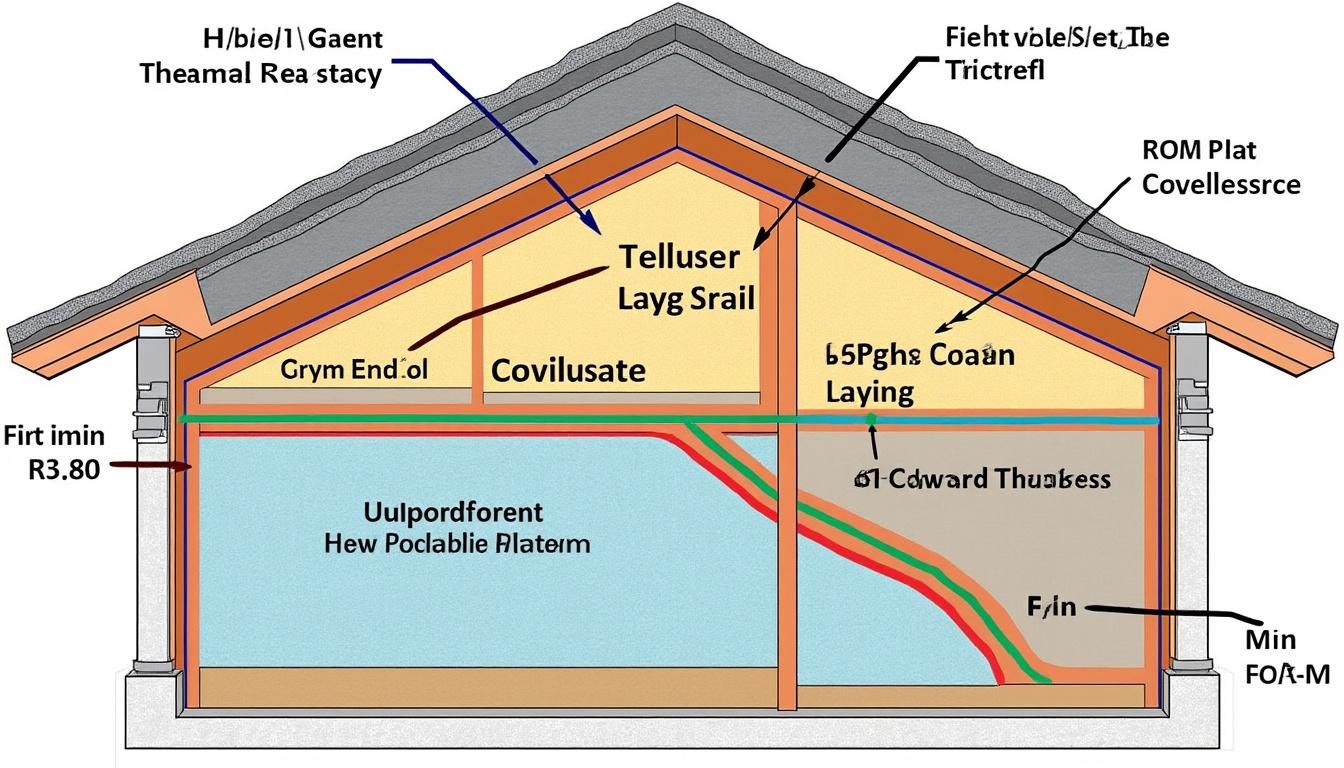
Comparing Insulation Types: Thickness Requirements for Achieving R38
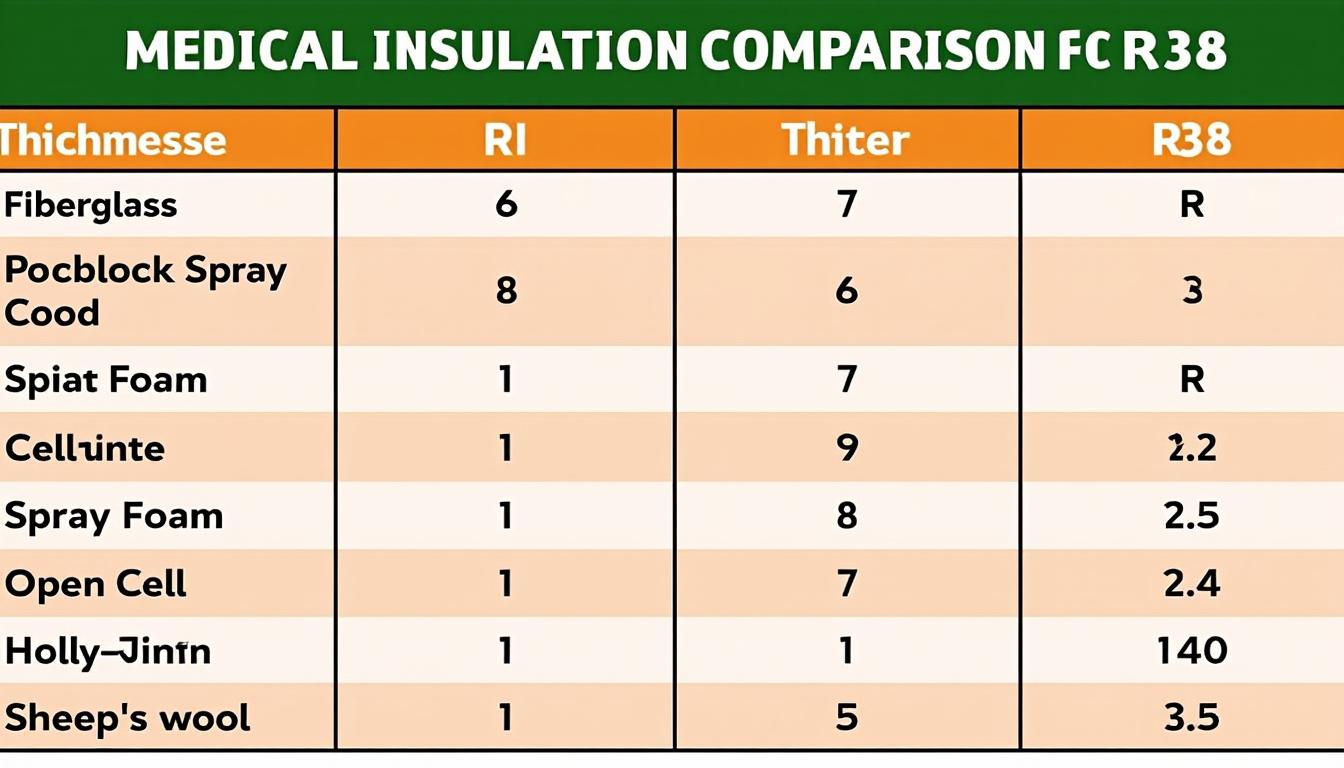
Choosing the appropriate insulation type for attaining R38 thickness involves considering the unique characteristics and thickness demands of each material. Commonly employed insulation materials such as fiberglass batts, cellulose, open-cell spray foam, and closed-cell spray foam present distinct thickness profiles due to their intrinsic R-values per inch. This variation impacts how much space the insulation will occupy and, consequently, influences construction decisions and energy savings potentials.
| Insulation Type | Typical R-Value per Inch | Approximate Thickness for R38 |
|---|---|---|
| Fiberglass Batt | 2.7 – 3.2 | 12 – 14 inches |
| Blown-In Cellulose | 2.5 – 3.0 | 13 – 15 inches |
| Closed-Cell Spray Foam | 6.0 – 7.0 | 5.5 – 6.5 inches |
| Open-Cell Spray Foam | 3.5 – 4.0 | 9.5 – 11 inches |
| Rigid Foam Board (Polyiso) | 5.6 – 8.0 | 5 – 7 inches |
These thickness variations reflect fundamental differences in how insulation materials interact with thermal energy. Closed-cell spray foam’s higher density and composition allow it to achieve higher thermal resistance with thinner applications. This makes it ideal for retrofit situations where space is limited or when an extra layer of insulation with air and moisture barrier capabilities is advantageous. Conversely, blown-in cellulose is popular for attic insulation due to its ease of installation, but it requires significantly more thickness to reach R38.
Consider a renovation in a single-story home in the northern U.S. where the attic joist depth limits insulation thickness to under 10 inches. In this case, closed-cell spray foam or rigid foam boards become compelling options to achieve R38 within spatial constraints. On the other hand, new construction with deeper attic cavities can accommodate fiberglass batts or cellulose with more thickness, allowing for competitive cost and adequate insulation performance.
Such comparisons emphasize the need to match insulation material choice with both structural limitations and climate-related energy efficiency goals. The appropriate thickness balances effective heat retention with installation practicalities, directly influencing home comfort year-round.
Factors Influencing R38 Insulation Thickness and Performance in U.S. Homes
Attaining consistent R38 insulation effectiveness involves understanding multiple interrelated factors beyond material selection and thickness. For homeowners and contractors striving for optimum energy savings, these conditions greatly influence how well the insulation performs over time.
Material Density and Quality – High-density insulation materials generally provide better insulation per unit thickness, meaning less space is needed for the same R-value. However, denser materials can also be heavier and more expensive. Choosing quality materials designed for your climate enhances long-term insulation durability and thermal resistance.
Installation Techniques – Proper installation is critical. Compression of fiberglass batts or inadequate fill of blown-in cellulose can reduce the effective R-value. Air gaps, seams, and gaps around wiring or plumbing must be minimized to prevent heat leaks. Experts recommend professional installation or thorough DIY preparation to optimize performance.
Climate and Building Codes – The International Energy Conservation Code (IECC) sets minimum insulation R-values depending on climate zones. In colder zones, R38 is typically required for attics to minimize heat loss, while milder climates may accept lower R-values. In 2026, many states update codes to emphasize better insulation emphasizing energy efficiency and environmental impact.
Moisture Management – Excess moisture accumulation in insulation reduces its thermal resistance and can cause mold. Proper ventilation and vapor barrier installation address this challenge, preserving insulation integrity and maintaining home comfort.
Space Limitations and Structural Design – Existing buildings often have limited cavity depth, making thick insulation impractical without major remodeling. Spray foam and rigid foam boards, which offer higher R-values per inch, serve as valuable alternatives to achieve R38 without compromising structural integrity or interior space.
Understanding these factors when planning insulation upgrades can prevent common pitfalls and ensure that your home investment translates into measurable energy savings and improved living conditions. For more nuanced guidance on insulation thickness selection, insights from expert industry sources can provide tailored recommendations for your specific building requirements.
Practical Installation Advice and Cost Considerations for R38 Insulation
Knowing the ideal thickness for R38 insulation is only part of the decision-making process; understanding installation nuances and associated costs completes the picture for homeowners and contractors looking to optimize home efficiency.
Air Sealing Prior to Installation – Before adding insulation, sealing any cracks, holes, and gaps in the building envelope drastically improves energy efficiency by reducing uncontrolled air infiltration. This step amplifies the effectiveness of R38 insulation, allowing the material to perform close to its rated thermal resistance.
Choosing the Right Insulation Type for Your Budget – Cost considerations typically balance initial outlay with long-term savings. Fiberglass batts tend to be among the most economical options, though they require more thickness. Spray foam insulation costs more upfront but offers better performance at reduced thickness and additional air-sealing benefits, potentially delivering superior cost savings over time.
Retrofitting Existing Structures – Upgrading to R38 insulation in older homes can present challenges related to space, ventilation, and moisture control. Professional assessments can help identify the most effective approach, often combining spray foam with rigid foam boards to maximize insulation performance without drastic structural alterations.
Incentives and Rebates – Federal, state, and local energy efficiency programs sometimes offer financial incentives for homeowners upgrading to recommended insulation levels such as R38. These incentives can significantly offset installation costs. For further details on such opportunities and guidelines, visit resources like Energy Star insulation recommendations.
Finally, a well-planned installation with the correct R38 thickness not only strengthens a home’s thermal envelope but also results in measurable energy savings and enhances occupant satisfaction through reliable temperature regulation. These benefits underline the value of investing in appropriate insulation thickness and meticulous application practices.
Maximizing Home Comfort and Efficiency with R38 Insulation Thickness
Beyond the technical specifications, the practical effects of R38 insulation thickness become apparent in improved living conditions and reduced environmental footprint. Homes properly insulated to R38 standards demonstrate tangible improvements in heating and cooling consistency, creating a healthier and more enjoyable indoor environment year-round.
In cold climates, R38 insulation thickness in attics and ceilings is especially effective at preventing heat loss during winter months. This thickness level helps maintain indoor warmth without overworking furnaces or heat pumps, which can be costly and inefficient when insulation is insufficient. Conversely, in warmer seasons, R38 insulation acts as a barrier against heat penetration, reducing the demand on air conditioning systems and contributing to a balanced indoor temperature.
Occupants of homes with appropriately installed R38 insulation often report fewer drafts, reduced noise infiltration, and a more stable internal climate, which together enhance overall comfort. Moreover, this insulation helps protect building components from temperature fluctuations that can accelerate material wear and energy waste.
For homeowners concerned with sustainability and energy independence, the right insulation thickness is a first step toward reduced reliance on fossil fuels and lower greenhouse gas emissions. Through strategic insulation upgrades, properties can improve their energy profiles and boost their market value due to better energy efficiency and durability.
R38 insulation thickness is not a one-size-fits-all solution but rather a flexible approach to meeting diverse building needs. As the 2026 building codes increasingly emphasize sustainability, investing in appropriate insulation thickness ensures homes remain ahead of regulatory trends while delivering practical benefits. For additional recommendations tailored to specific climates and construction types, readers can explore detailed insulation resources like the expert insights on R38 insulation.